
A standard golf grip is 0.900″ in diameter, measured 2 inches down from the butt cap. Every quarter inch off that number changes your ball flight. Here is how to dial it in — with the same reference data Mitchell Golf has published for the trade since 1988.
Grip size is the most overlooked variable in club fitting. Players will spend hundreds on a shaft upgrade, weeks shopping for the right driver, and an entire winter retooling their swing — while gripping a club that is the wrong diameter for their hand. The result is a club that physically fights every release the player tries to make. Fix the grip size, and you usually fix two or three other things at the same time.
This guide gives you the same reference framework Mitchell Golf has used to fit clubs on PGA Tour vans, in pro shops, and on manufacturer production lines for more than thirty-five years. We cover the measurement standard, the four published size brackets, how to verify your fit with a glove cross-check, what each wrong choice does to ball flight, and the exact tape math you need when a stock grip is one size off.
1. Why Grip Size Matters More Than Most Golfers Think
Two surfaces of your hand actually transmit force into the club: the lifeline of the lead hand and the fingers of the trail hand. Everything you feel as “grip pressure” is really just micro-adjustments at those two contact patches. If the grip is too thin for those patches, the small muscles of the hand have to clamp down to control the club — introducing tension that propagates up the forearms and into the shoulder. If the grip is too thick, those same patches lose their feel for face angle, and the hands stop releasing the club squarely through impact.
Tour data backs this up. Golf Digest’s club-fitter survey found that more than 20% of recreational golfers test into a grip size different from what they currently play — and almost all of them gain dispersion improvement after the switch. Mitchell Golf’s own work with tour fitters tells the same story: when the hand-to-grip relationship is wrong, the player compensates in the swing, and the compensation is rarely repeatable.
Mitchell rule of thumb: If your lead-hand fingertips dig into the heel pad when you take a normal grip, the grip is too thin. If they don’t reach the heel pad at all, the grip is too thick. They should barely touch.
2. The Four Standard Grip Sizes
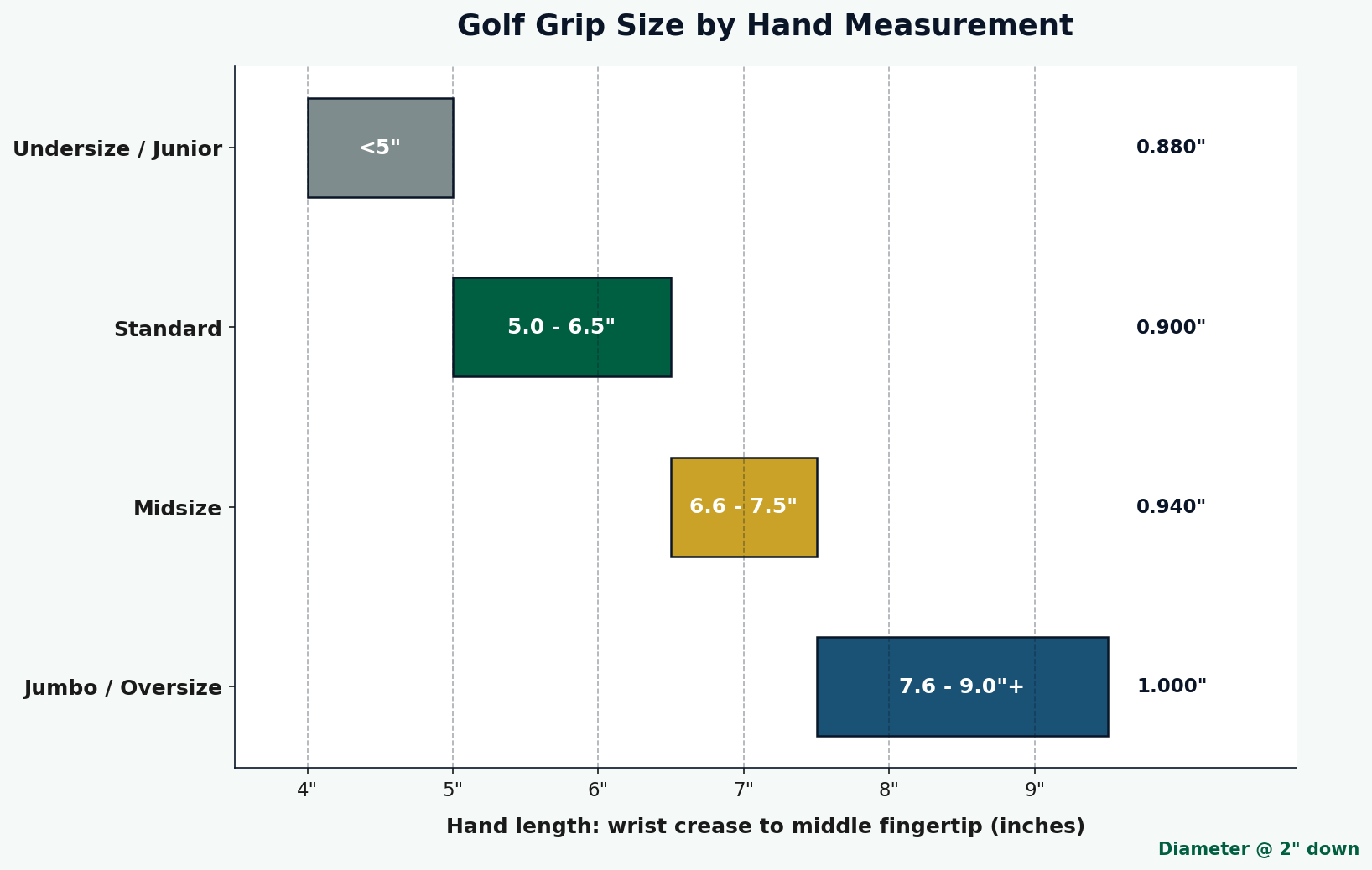
Although manufacturers use a dozen marketing names, the industry has standardized on four sizes measured at a single reference point: 2 inches down from the butt cap. That reference is universal — Mitchell Golf shop fixtures, Golf Pride spec sheets, Lamkin spec sheets, and every reputable fitting machine in the world measure at the same spot.
Figure 1. Mitchell Golf grip-size reference chart. Hand length is wrist crease to middle fingertip on the lead hand.
Undersize and Junior (~0.880″)
Designed for juniors, ladies with small hands, and adults whose hand length is under 5 inches. Most undersize adult grips are simply ladies-spec grips installed on lighter shafts. If your child’s grip looks like a soda can in their hand, this is the size you need.
Standard (0.900″)
The factory default for men’s clubs since the early 1980s. Designed around a 5.0″–6.5″ lead-hand measurement, which covers roughly 55–60% of adult men. This is what comes on virtually every off-the-rack iron set unless ordered otherwise.
Midsize (~0.960″)
About 1/16 of an inch thicker than standard. Suits hand lengths from 6.6″–7.5″. The most common upsize for adult men who play stock irons and feel they are “wristy” or who hook the ball under pressure. Midsize grips also reduce grip pressure on bigger hands without dropping all the way down to a jumbo.
Jumbo / Oversize (~1.000″)
Roughly 1/8 of an inch thicker than standard. Designed for hand lengths of 7.6 inches and up. Also widely used by players with arthritis, carpal tunnel, or finger-joint inflammation because the larger diameter requires less pressure to maintain control of the club.
Note on naming: Some manufacturers use “Oversize,” “Jumbo,” and “Plus 1/8″ interchangeably. The industry standard is that they are all the same finished diameter band — about 1.000″ at the 2” reference point.
3. How to Measure Your Hand the Right Way
The most reliable home-friendly method has not changed since Ed Mitchell, PGA, published the first Mitchell Golf grip-sizing reference. Use a steel ruler or a stiff tape measure, not a flexible cloth tape that curves around the palm.
- Use your lead hand. For a right-handed golfer, that is the left hand. Lay the hand flat on a table, palm up. Spread the fingers naturally — do not splay them.
- Find the wrist crease. The major crease where your forearm meets your wrist. Place the zero mark of the ruler at that crease.
- Run the ruler straight to the middle fingertip. Keep it flat against the palm. Do not bend it over the fingers or curve it around the heel pad.
- Read the number at the tip of the middle finger. Record it to the nearest 0.1 inch.
- Cross-reference with the chart in Section 2. Use the size that matches your reading.
If you fall right on a boundary (say 6.5 inches exactly), play the smaller size and add tape build-up if needed. It is much easier to add tape than to remove material from a grip.
Pro tip: If you are between sizes and prone to a slice, lean toward the smaller grip. If you are between sizes and prone to a hook, lean toward the larger one. The physics works for you in both directions.
4. Glove Size as a Cross-Reference
The trade secret of every good fitter is that they verify the hand measurement against the glove size. The two should agree. If they don’t, take the measurement again — usually it is the ruler that was wrong.
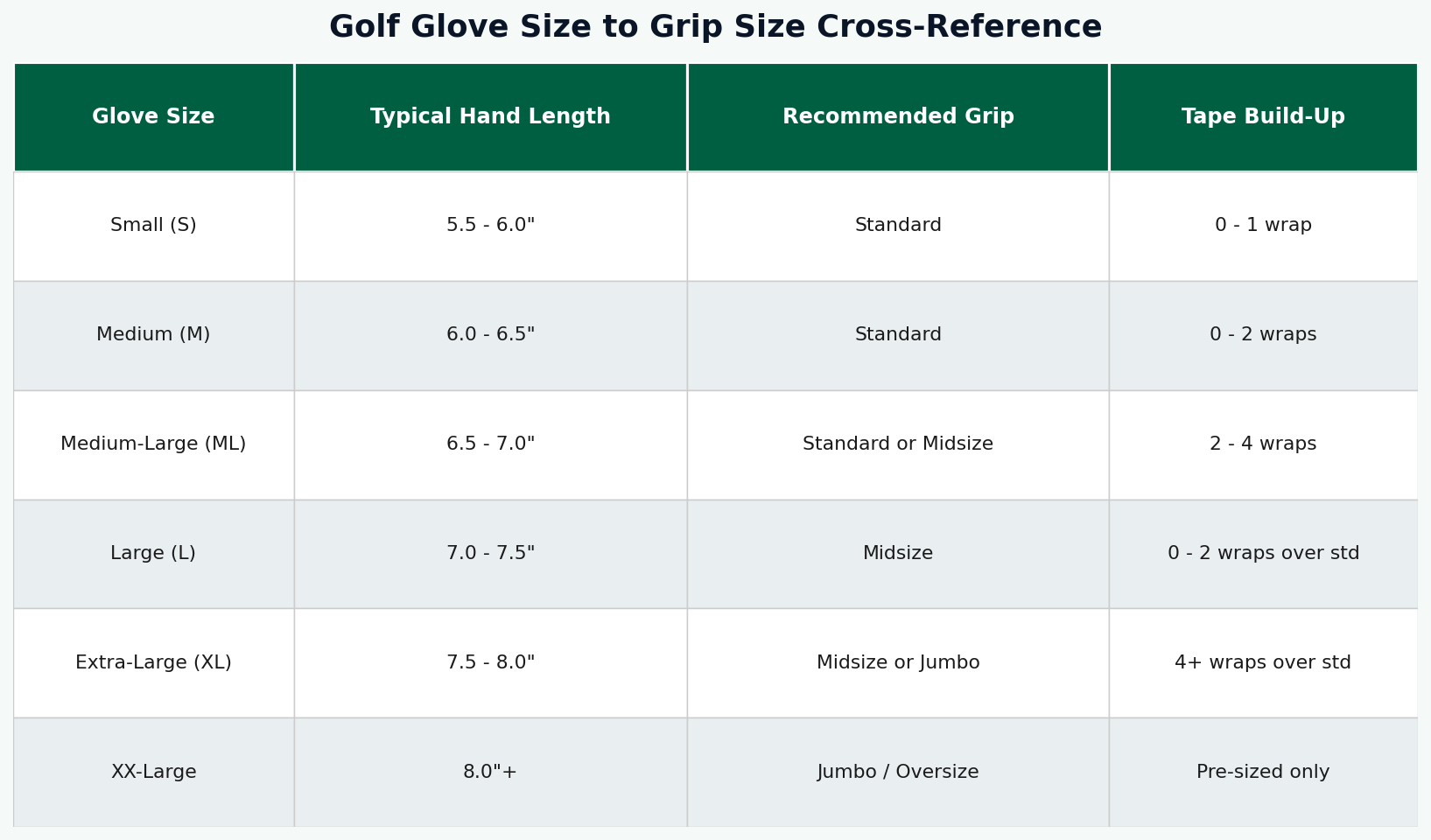
Figure 2. Glove-size cross reference. Use this table as a sanity check on your wrist-to-fingertip measurement.
A men’s medium-large glove typically points to a standard grip with a couple of wraps, but only the hand measurement gives you the final answer. MyGolfSpy’s grip-fitting research shows that two golfers wearing the same medium glove can have a hand-length spread of nearly three-quarters of an inch — more than enough to push one into midsize territory.
5. How Grip Size Affects Ball Flight
This is the part most golfers underestimate. Grip diameter changes how fast your hands can release the club through the hitting zone. The wrong size doesn’t just feel bad — it actively redirects the ball.
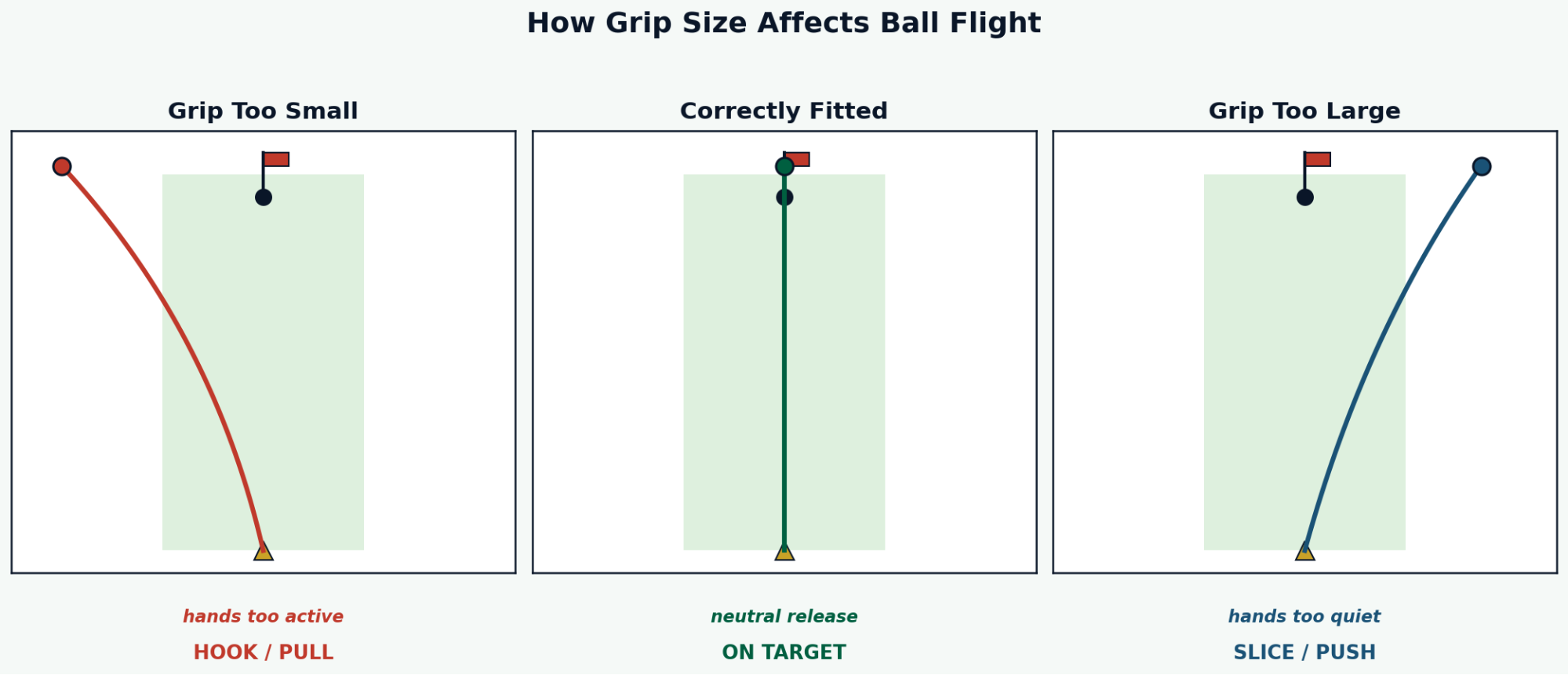
Figure 3. The dispersion pattern produced by a grip that is too small (left), correctly fitted (centre), or too large (right).
Grips that are too small → hooks and pulls
A grip that is too thin gives the hands extra leverage. The wrists release earlier and faster, the clubface closes through impact, and the ball goes left for a right-handed player. Many golfers who have battled a chronic hook for years are simply playing a grip that is one size too small for their hand — the moment they go up to a midsize the dispersion tightens.
Grips that are too large → slices and pushes
The opposite happens with an oversize grip. The thicker the grip, the more torque the hand has to generate to rotate the clubface closed. For most amateurs that torque never quite arrives in time, the face stays open, and the ball leaks right. Golf.com’s deep dive on grip diameter covers this dynamic at length and arrives at the same conclusion.
Grip pressure as the hidden variable
Even with the correct diameter, gripping the club too tightly will undo the benefit. Mitchell Golf teaches a 4–5 out of 10 pressure scale: firm enough to keep the club from slipping at the top, light enough that the forearms stay relaxed. A properly sized grip lets you sit at that pressure naturally.
6. Build-Up Tape: How Many Wraps Move You Up a Size
If you fall between two sizes, or if your dealer has the right grip in stock but only in one diameter, the answer is build-up tape. Mitchell Golf publishes the conversion math in our technical reference PDF, but the short version is straightforward.
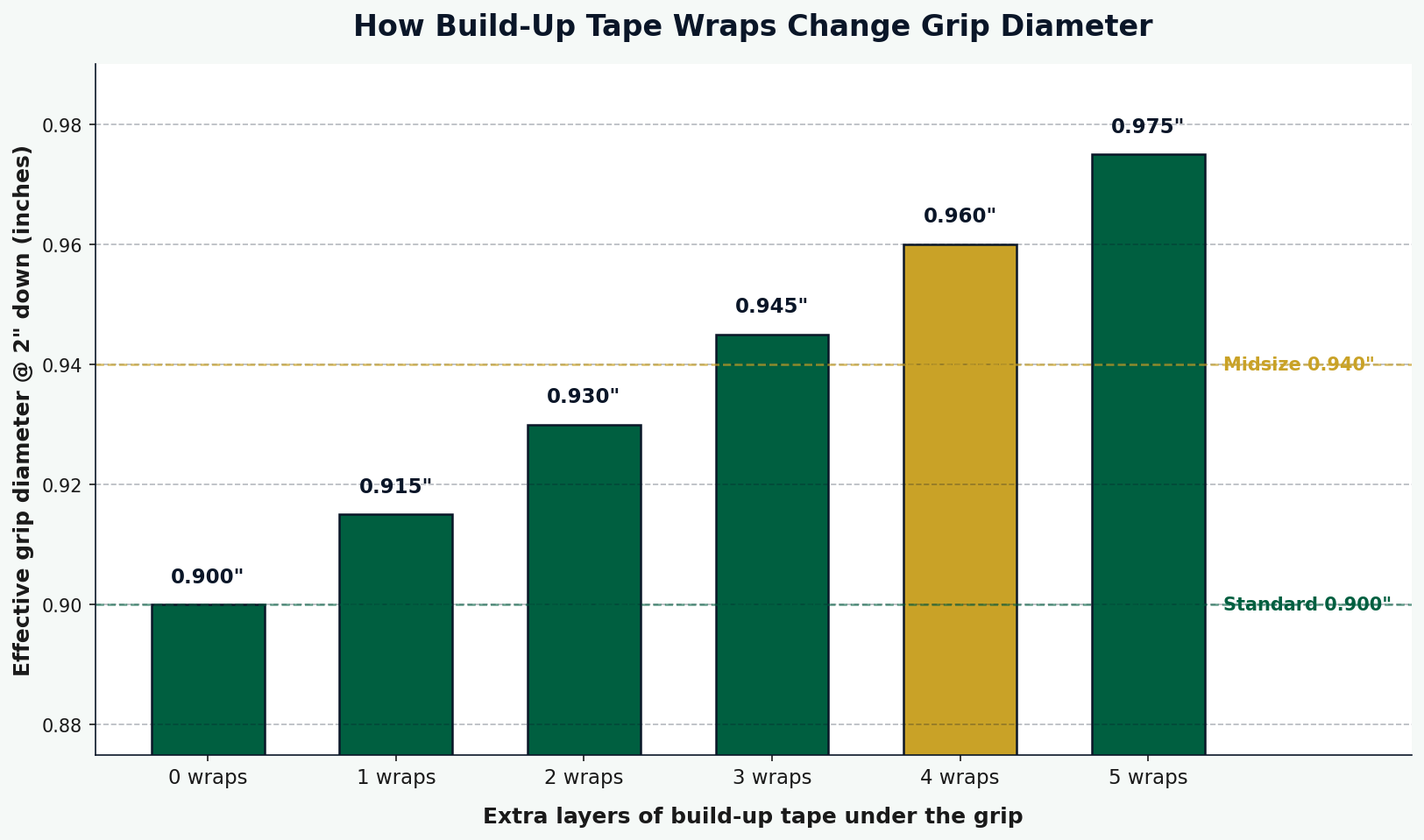
Figure 4. Effective grip diameter at the 2″ reference point as wraps of standard grip tape are added. Four wraps plays close to a true midsize.
One full wrap of standard 3/4-inch double-sided grip tape adds approximately 0.015 inches to the finished diameter. Four wraps adds about 0.060 inches — just shy of the difference between standard and midsize, which is why most pro shops use four wraps as the working “midsize equivalent” when they don’t have the actual midsize grip in stock.
The four-wrap ceiling
Most grip rubber compounds will only stretch so far. Pushing past four wraps risks tearing the grip during installation, creating a lumpy or asymmetric finished surface, or stressing the underlisting and causing the grip to slip on the shaft later. If you need to go bigger than a midsize equivalent, switch to a true midsize or jumbo grip rather than stacking tape.
The build-up-vs-rebuild decision
Building up a standard grip to midsize equivalent works fine for one or two clubs. If you are changing every grip in the bag, install true midsize grips from the start. They have a more uniform profile, lower the long-term cost, and feel cleaner in the hand.
7. The Mitchell Golf Fitting Test
Once you have your initial size from the chart, the final validation is a feel test. Mitchell Golf’s 2-Day Intro Class and 5-Day Master Performance School teach the same procedure used in Tour vans:
- Take your normal grip with the lead hand only. Look down at the back of your hand.
- Check the fingertip contact. The pads of your middle and ring fingers should just barely touch the heel pad of your palm.
- If the fingertips dig in — the grip is too thin. The hand is wrapping too far around. Go up a size.
- If the fingertips don’t reach the heel pad at all — the grip is too thick. Your hand can’t close around it cleanly. Go down a size.
- If they barely touch — the size is right. Move on to grip pressure and texture.
This single test catches more sizing errors than any chart can. The chart gets you 90% of the way; the fingertip test catches the other 10%.
8. The Tools a Pro Shop Uses
If you are building or repairing clubs in a shop environment, you need a few specific tools to do grip sizing properly. Mitchell Golf builds every one of these in-house and ships them to manufacturers and pro shops worldwide.
- Pro Tour Grip Vise — the shop-standard vise used to hold the shaft secure during grip installation and removal. Rubberized jaws protect the shaft finish.
- Digital Caliper — for measuring grip diameter at the 2″ reference point. Resolution of 0.001 inches gets you the accuracy you need.
- Grip Tape (3/4″) — standard double-sided tape, the build-up reference for every conversion in this guide.
- Grip Stations — bench, floor, and portable. The same units used on PGA Tour vans, on production lines, and in tens of thousands of pro shops worldwide.
9. Five Mistakes to Avoid
Mistake 1 — measuring with a tape measure that bends
A cloth tape curves over the heel pad and adds half an inch to your reading. Use a steel ruler.
Mistake 2 — trusting glove size alone
Glove sizing accounts for hand width as much as length. Two golfers with the same width can have very different finger lengths. Always confirm with the wrist-to-fingertip measurement.
Mistake 3 — stacking more than four wraps of tape
Beyond four wraps, the grip compound starts to deform and lose its uniformity. If you need to add more diameter, use a true midsize or jumbo grip from the start.
Mistake 4 — sizing one grip and assuming the whole bag
The putter is sized differently from full-swing clubs, and many players carry hybrids or wedges from different sets that came factory with different diameters. Measure every grip in the bag.
Mistake 5 — ignoring the loft/lie adjustment that should follow a regrip
A new grip can shift your hand position by a fraction of an inch, which can shift your effective lie angle by a degree or more. After any regrip, run the clubs through a loft and lie check. See our loft and lie reference guide for the full procedure.
Warning: Never reinstall a used grip after pulling it. The adhesive layer is compromised, the inside of the grip is contaminated with old solvent, and the diameter will not be accurate. Always install with a fresh grip and fresh tape.
10. A Note on Putter Grips
Putter sizing works in the opposite direction. On full-swing clubs you want enough hand activity to square the face dynamically. On the putter you want the hands quiet so the stroke is driven by the shoulders, and you want minimal face rotation across impact.
That is why most tour players in the last decade have moved to oversized putter grips. The thicker the grip, the less the small muscles of the hand contribute to the stroke, and the more consistent the start-line becomes.
Mitchell Golf’s TourGauge Putter Machine measures putter loft and lie to 0.1 degrees so the rest of the head geometry stays exactly where the player needs it after any grip change.
11. Grip Texture and Material — Does It Change Size?
One question we get every season: does the type of grip rubber affect the way a given size feels? The answer is yes, but less than most golfers think. The four published size brackets are measured at the same point on the same rubber test fixture for every brand, so a 0.900″ standard from Golf Pride and a 0.900″ standard from Lamkin are physically the same diameter. What changes is the texture, the surface tack, and the underlisting compression.
Corded grips
Cord grips have woven cotton fibres pressed into the rubber surface. The fibres make the grip feel slightly larger in dry hands and considerably larger in wet hands — because the cord grips back at the skin instead of slipping. If a player rotates from a wrap or rubber grip to full cord, expect them to report the grip feels “a touch bigger” even when the caliper says identical. Account for this by considering one wrap less of build-up tape when switching to cord.
Rubber and wrap grips
Pure rubber grips and “wrap” style grips (which mimic the look of leather) feel softer and more compressible. Under hard grip pressure the rubber yields a fraction of a millimetre, so the effective diameter is marginally smaller than a cord grip in the same caliper reading. Players who fight wet conditions often play one wrap of build-up tape under a rubber grip to bring the dry-condition feel back to the midline.
Leather grips
Wrapped leather grips have a different finished profile because the leather is wound around an underlisting. The diameter at the 2″ point can be controlled precisely by the installer, which is why traditional pro shops have always offered leather as a custom-build option. Mitchell Golf grip stations work for both modern molded grips and traditional leather installation.
12. Grip Pressure — The Variable That Ties It All Together
You can fit the diameter perfectly and still lose all the benefit if the grip pressure is wrong. Mitchell Golf teaches a 4–5 out of 10 scale: firm enough to keep the club from slipping at the top of the backswing, light enough that the forearms stay relaxed and the wrists can hinge. Pressure that is too high creates tension that locks up the swing path; pressure that is too low lets the club slip in transition, which the hands then over-compensate for at the bottom.
The Mitchell Golf grip-pressure test is simple. Set up to the ball with a 7-iron. Take your normal grip. Have a friend try to gently pull the club straight out of your hands while you resist passively, without bracing. If they can slide it out with mild resistance, your pressure is about right. If they can’t budge it, you are squeezing. If it pops out the moment they pull, you are too loose.
Why the right size enables the right pressure: a grip that fits your hand correctly lets you hold the club at the 4–5 scale naturally. If the grip is too thin, you have to clamp down just to control the club; if it is too thick, you grip tightly to feel the face. The diameter and the pressure are two parts of the same equation — you cannot fix one without the other.
Quick-Reference Summary Table
| Size | Hand length | Diameter @ 2″ | Glove size | Best for |
|---|---|---|---|---|
| Undersize / Junior | Under 5″ | ~0.880″ | Junior / S | Juniors, very small adult hands |
| Standard (men’s) | 5.0″ – 6.5″ | 0.900″ | S / M / ML | Majority of adult male golfers |
| Midsize | 6.6″ – 7.5″ | ~0.960″ | ML / L | Larger hands, players who hook the ball |
| Jumbo / Oversize | 7.6″ + | ~1.000″ | XL / XXL | Very large hands, players with arthritis |