
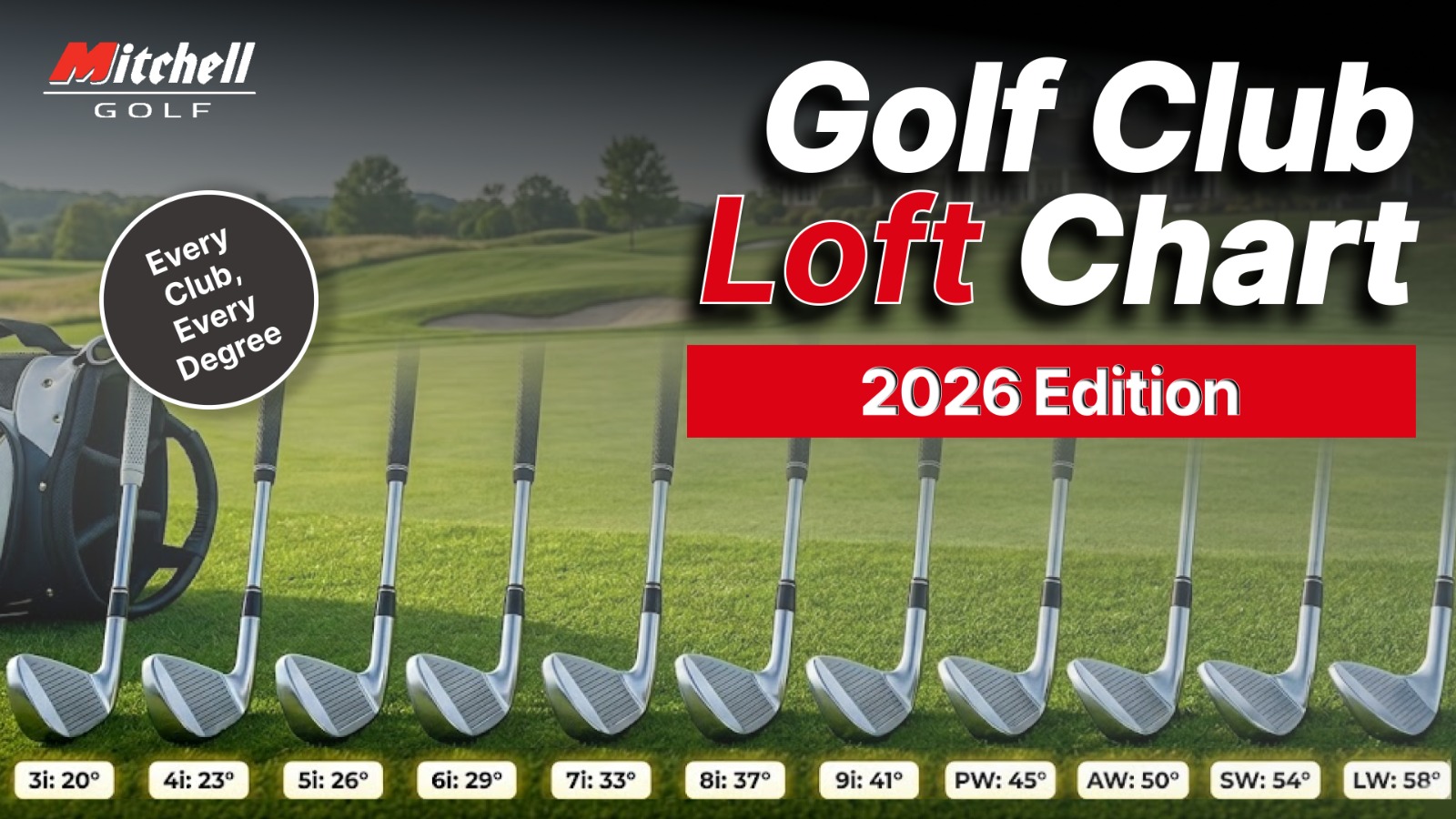
Every golfer wants to know what loft their clubs should be. Most find a quick chart, see a table of numbers, and assume those numbers are fact. Here is the truth most loft charts never tell you: there is no universal standard for golf club loft.
A 7-iron from one manufacturer may measure 28°. From another, 35°. Both are sold as a “7-iron.” The number stamped on the sole tells you where that club sits in the manufacturer’s set sequence it does not guarantee a specific loft angle. This has become especially pronounced over the past 30 years as brands have aggressively strengthened lofts to inflate distance numbers.
At Mitchell Golf, we have been making professional loft and lie machines for club fitters and repair shops for decades. We have seen the actual measured loft of thousands of clubs. This guide is built on that real-world data.
What Is Golf Club Loft?
Golf club loft is the angle between the clubface and a perfectly vertical line. More loft means a more laid-back face the ball launches higher and travels a shorter horizontal distance. Less loft means a more vertical face lower launch, more roll, greater potential carry for players with sufficient swing speed.
Dynamic vs. Static Loft: The loft stamped on a club is its static loft. At impact, the actual loft presented to the ball called dynamic loft is affected by shaft flex, angle of attack, and face position. Fitters optimise dynamic loft, which is why spec loft alone does not tell the whole story.
The Complete Golf Club Loft Chart (2026)
The chart below shows standard loft ranges for every major club type. Use this as a reference – then verify actual loft on your specific clubs with an angle measurement machine.

Figure 1: Master golf club loft chart all club types, loft ranges in degrees (2026). Data reflects typical industry ranges; actual loft varies by brand and model. Source: mitchellgolf.com
| Club | Loft Range | Typical Carry (Mid-HCP) | Category |
|---|---|---|---|
| Driver (1-Wood) | 8° – 12° | 200–270 yds | Wood |
| 3-Wood | 13° – 16.5° | 185–225 yds | Wood |
| 5-Wood | 18° – 21° | 170–210 yds | Wood |
| 7-Wood | 21° – 24° | 160–200 yds | Wood |
| 2-Hybrid | 16° – 18° | 185–210 yds | Hybrid |
| 3-Hybrid | 19° – 21° | 170–195 yds | Hybrid |
| 4-Hybrid | 22° – 25° | 158–182 yds | Hybrid |
| 5-Hybrid | 25° – 28° | 148–170 yds | Hybrid |
| 2-Iron | 17° – 20° | 175–205 yds | Iron |
| 3-Iron | 20° – 23° | 165–195 yds | Iron |
| 4-Iron | 23° – 27° | 155–180 yds | Iron |
| 5-Iron | 26° – 30° | 145–170 yds | Iron |
| 6-Iron | 29° – 33° | 135–160 yds | Iron |
| 7-Iron | 33° – 37° | 125–150 yds | Iron |
| 8-Iron | 36° – 40° | 115–138 yds | Iron |
| 9-Iron | 40° – 44° | 100–125 yds | Iron |
| Pitching Wedge | 44° – 48° | 85–105 yds | Wedge |
| Gap / Approach Wedge | 50° – 54° | 70–90 yds | Wedge |
| Sand Wedge | 54° – 58° | 55–75 yds | Wedge |
| Lob Wedge | 58° – 64° | 40–60 yds | Wedge |
| Putter | 1.5° – 4.5° | N/A | Putter |
Note: Ranges reflect typical industry values. Modern game-improvement irons may be 4°–6° stronger than traditional irons at the same number. Verify with a loft machine before fitting or bending.
Golf Club Loft Chart by Club Type
Driver Loft Chart
Drivers carry the least loft of any full-swing club, typically ranging from 8° to 12°. The right driver loft depends primarily on swing speed and angle of attack. Slower swing speeds (under 85 mph) benefit from more loft (10.5°–12°) to maximise carry. Faster swing speeds (over 100 mph) with a positive angle of attack can drop to 8°–9°.
| Swing Speed | Recommended Driver Loft | Primary Goal |
|---|---|---|
| Under 75 mph | 12° – 13° | Maximise carry distance |
| 75 – 85 mph | 10.5° – 12° | High launch, solid carry |
| 85 – 95 mph | 9.5° – 10.5° | Balance of carry and roll |
| 95 – 105 mph | 9° – 10° | Penetrating ball flight |
| Over 105 mph | 7.5° – 9° | Control spin, maximise total |
Fairway Wood Loft Chart
Fairway woods typically span from 13° (strong 3-wood) to 26° (9-wood). The 3-wood is the most common, usually 15°. The 5-wood (18°–21°) is an excellent alternative for players who struggle with long irons, offering a higher flight and more stopping power than a hybrid at equivalent loft.
Iron Loft Chart by Category – Players vs. Game-Improvement
This is where the “no universal standard” problem is most significant. The chart and table below compare players’ irons, traditional game-improvement irons, and modern strong-lofted game-improvement irons. The same club number can represent angles separated by up to 8°. See our guide on What Is Loft and Lie in Golf? for a deeper explanation of why this matters to your game.

Figure 2: Iron loft comparison by category. Modern GI irons have been strengthened 4–6° vs. 1990s equivalents – a 7-iron is no longer a 7-iron across brands.
| Iron | Players’ / Blade | Traditional GI (1990s) | Modern GI (Strong) |
|---|---|---|---|
| 3-Iron | 21° | 19° | 17° |
| 4-Iron | 24° | 22° | 19° |
| 5-Iron | 27° | 25° | 22° |
| 6-Iron | 31° | 28° | 25° |
| 7-Iron | 35° | 32° | 28° |
| 8-Iron | 39° | 36° | 32° |
| 9-Iron | 43° | 40° | 36° |
| PW | 47° | 44° | 40° |
The Loft Inflation Problem: When a brand’s modern 7-iron is 28° and their pitching wedge is 40°, you have just 12° of loft spread across four clubs – creating massive distance gaps. Always check your actual iron lofts with a loft angle machine before building a wedge system.
Wedge Loft Chart
- Pitching Wedge (PW): 44°–48° – Bridge between the iron set and scoring wedges. In modern GI sets, may be as low as 40°–43°.
- Gap / Approach Wedge (GW/AW): 50°–54° – Fills the loft gap between PW and SW. Essential in any well-gapped wedge system.
- Sand Wedge (SW): 54°–58° – The classic bunker and short-game wedge. Higher bounce suits soft conditions.
- Lob Wedge (LW): 58°–64° – Maximum loft for high flop shots, tight lies, and soft-landing approaches.
Putter Loft
Putters are lofted between 1.5° and 4.5°, with most standard putters at 3°–3.5°. The correct putter loft depends on your stroke an ascending blow requires less loft; a descending stroke needs more to get the ball smoothly rolling rather than skidding.
Golf Club Loft and Distance Chart
Loft and carry distance have an inverse relationship as loft increases, distance generally decreases at the same swing speed. The chart below shows typical carry distances for a mid-handicap golfer with approximately 85 mph driver swing speed. These are averages; individual distances vary based on swing speed, angle of attack, and conditions.

Figure 3: Golf club loft and distance chart for a mid-handicap golfer (~85 mph driver swing speed). The trend is non-linear distance drops sharply between wedge lofts.
| Club | Typical Loft | Avg. Carry – Men | Avg. Carry – Women |
|---|---|---|---|
| Driver | 10.5° | 225–240 yds | 145–170 yds |
| 3-Wood | 15° | 205–220 yds | 130–155 yds |
| 5-Wood | 19° | 190–205 yds | 120–145 yds |
| 4-Hybrid | 23° | 170–185 yds | 110–135 yds |
| 5-Iron | 28° | 155–170 yds | 100–125 yds |
| 6-Iron | 31° | 145–160 yds | 92–118 yds |
| 7-Iron | 35° | 135–150 yds | 85–110 yds |
| 8-Iron | 38° | 122–138 yds | 76–100 yds |
| 9-Iron | 42° | 108–124 yds | 68–90 yds |
| Pitching Wedge | 46° | 95–108 yds | 60–80 yds |
| Gap Wedge | 52° | 80–92 yds | 50–68 yds |
| Sand Wedge | 56° | 65–78 yds | 40–58 yds |
| Lob Wedge | 60° | 50–62 yds | 30–46 yds |
Why Loft Numbers Keep Changing – The Loft Strengthening Trend
If you pick up a set of irons from 1990 and compare them to a modern game-improvement set, you will notice something startling: the modern set’s 7-iron is often 6°–8° stronger than the vintage one. A 1990s 7-iron typically measured 34°–36°. Many modern game-improvement 7-irons sit at 27°–29°.
The reason is distance marketing. A stronger-lofted 7-iron goes farther than a traditional one. Manufacturers discovered that golfers purchase clubs based partly on perceived distance gains. By quietly strengthening lofts while keeping the same club numbers, brands could advertise significant distance improvements. The golfer hits their “7-iron” farther – because it is now effectively a 5-iron.
Real-World Consequences of Loft Strengthening
- Gapping problems: When a PW is 40° and the next club is a 54° sand wedge, there is a 14° gap covering 40-50 yards – a huge scoring zone with no club.
- Ball flight issues: Stronger-lofted irons launch lower with less spin, making stopping the ball on firm greens harder for slower-swinging players.
- Fitting confusion: A 28° 7-iron from one brand and a 35° 7-iron from another require completely different wedge gapping decisions.
The Bottom Line: Do not trust the number on the sole. Trust the measurement. A professional loft and lie machine tells you the actual angle of every club in your bag so you can build a complete, properly gapped set from driver through lob wedge.
Hybrid Golf Club Loft Chart
Hybrids were designed to replace long irons (2-, 3-, and 4-irons) that most recreational golfers struggle to hit consistently. They are numbered like irons but the loft at any given number varies more than irons. The table below shows the standard hybrid loft chart and the iron each hybrid typically replaces:
| Hybrid | Typical Loft | Replaces (Traditional Iron) | Typical Carry (Mid-HCP) |
|---|---|---|---|
| 1-Hybrid | 14° – 16° | 1-Iron / 4-Wood | 200–225 yds |
| 2-Hybrid | 16° – 18° | 2-Iron | 188–210 yds |
| 3-Hybrid | 19° – 21° | 3-Iron | 175–195 yds |
| 4-Hybrid | 22° – 25° | 4-Iron | 162–182 yds |
| 5-Hybrid | 25° – 28° | 5-Iron | 150–170 yds |
| 6-Hybrid | 28° – 31° | 6-Iron | 140–160 yds |
Hybrid Fitting Tip: When building a set that transitions from fairway woods to hybrids to irons, the key is loft gapping – not number matching. Use actual measured loft (not the number stamped on the club) to build the sequence.
Wedge Gapping – Building Your Loft System from PW to LW
Your wedges are the scoring clubs. The ideal wedge system maintains roughly 4°–6° of loft between each wedge, producing approximately 12–18 yards of carry distance separation per club. That means every distance from 40 to 105 yards has a specific club assigned – no dead zones.

Figure 4: Wedge gapping chart. Left panel: loft angles per wedge. Right panel: carry distance separation. Ideal gap: 4°–6° loft / 12–18 yards distance.
Common Wedge Gapping Configurations
| Setup | PW | Gap Wedge | Sand Wedge | Lob Wedge |
|---|---|---|---|---|
| Traditional (3-wedge) | 46° | — | 52° or 56° | 60° |
| Standard (4-wedge) | 46° | 52° | 56° | 60° |
| Strong-loft GI (4-wedge) | 42° | 48° | 54° | 58° or 60° |
| Short-game specialist | 46° | 50° | 54° | 58° + 62° |
Start by measuring your PW loft before purchasing standalone wedges. Use Mitchell Golf loft and lie machines to record your PW’s exact angle, then build the rest of your wedge system around it.
Printable Golf Club Loft Chart (2026 Reference Card)
The reference card below covers all standard club types loft range, typical carry distance, and best-use scenario in a single view. Print it, laminate it, keep it in your bag as a quick reference.

Figure 5: Printable golf club loft chart – 2026 reference card. From mitchellgolf.com
How to Use This Chart: The ranges shown are typical industry values. Your specific clubs may sit anywhere within or outside those ranges. Before any club fitting or bending session, run each club through a loft and lie machine to capture actual measured angles. Then use the chart as a reference for where each club should sit in a well-gapped set.
How Loft Affects Ball Flight
Loft is one of the five primary ball-flight laws along with path, face angle, centeredness of strike, and speed. Here is how loft interacts with each factor:
- Launch angle: Static loft is the primary driver of launch angle, modified by angle of attack. A steep downward attack effectively delofts the club. A shallow or positive attack (common with the driver) adds loft.
- Spin rate: Higher loft generally creates more backspin. Spin produces a descending ball flight and stopping power on the green. Low-lofted strong irons create less spin which is partly why stronger-lofted irons can be harder to stop on firm greens.
- Distance: The relationship between loft and distance is non-linear. Too little loft produces a low-launching ball that drops quickly. Too much loft reduces ball speed by converting it into vertical velocity.
- Trajectory and wind: Lower-lofted clubs produce a more penetrating ball flight less affected by headwinds. Higher-lofted clubs produce a higher apex that lands more steeply better for soft greens but more susceptible to wind deflection.
Verify Your Loft Club Fitting with a Loft & Lie Machine
A golf club loft chart is a starting point. The actual loft of the clubs in your bag may differ from published specifications sometimes significantly.
Why Actual Loft Drifts from Spec
Manufacturing tolerances mean even new clubs can be ±1° to ±2° from their published loft spec. Over time, ground impact causes the hosel to gradually roll forward, weakening loft. By the time a club is two seasons old and has seen several hundred range sessions, its real loft may be several degrees off spec.
How Mitchell Golf Angle Machines Work
Mitchell Golf loft and lie machines use a precision-ground aluminum sole plate and accurate angle measurement system to display the exact loft of any iron, hybrid, or wedge. The process is simple:
- Place the club sole flat on the machine’s sole plate.
- Read the loft angle directly from the measuring arm or digital display.
- If loft is off, bend to spec using Mitchell Golf’s companion club bending machines.
- Re-measure to verify the bend was accurate.
The entire process takes under two minutes per club. For a full 14-club fitting, a fitter can verify and record every loft in a bag in under 30 minutes the foundation for all subsequent gapping and fitting decisions.
Mitchell Golf Products for Loft Verification
Loft & Lie Machines

Precision analog and digital angle machines trusted by professional clubfitters and OEM manufacturers worldwide. Multiple models available for benchtop and portable use.
Club Bending Machines
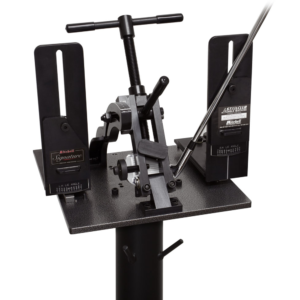
Mitchell Golf bending bars for irons, wedges, and hybrids built to adjust loft and lie to exact spec without hosel damage.
Club Fitting Supplies
Everything the professional club fitter needs: gauges, shafts, grips, tools, and repair supplies.
Shaft Tools
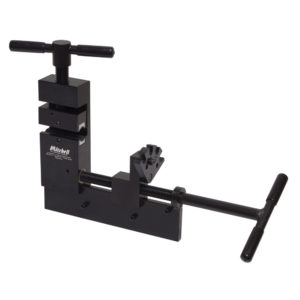
Frequency analysers, spine alignment tools, and shaft preparation equipment.