
The golf club repair business is one of the most accessible entry points into the golf industry and one of the most overlooked. While golf equipment manufacturing is a multi-billion-dollar market, the repair and service side of that market is fragmented, underserved in most regions, and built almost entirely on relationships and craftsmanship rather than marketing budgets. A single technician with the right training and the right machines can generate meaningful income from a spare bedroom, a corner of a pro shop, or a dedicated retail bay.
Mitchell Golf Equipment Company has spent nearly four decades building the angle machines, grip stations, and shaft tools that professional club builders rely on the same equipment used on PGA and LPGA Tour trucks and OEM production lines. This guide draws on that manufacturing and training experience to walk you through exactly what it takes to start a golf club repair business in 2026: the skills, the tools, the real costs, and the pricing structure that makes the numbers work.
Is a Golf Club Repair Business Right for You?
Before investing in equipment, it is worth understanding the market you are entering. According to the National Golf Foundation, U.S. on-course golf participation surpassed 29 million players in 2025 the eighth consecutive year of growth while total participation across on-course and off-course formats (driving ranges, simulators, entertainment venues) reached an all-time high of 48.1 million, up 50% over the past decade. Every one of those golfers owns clubs that need grips replaced, lofts and lies checked, and shafts repaired or upgraded over time.
That demand rarely gets matched with supply. Many pro shops do not have in-house repair capability, mobile fitters are stretched thin across large territories, and big-box retailers typically outsource or under-invest in technical service. A technician who can deliver same-day regripping, accurate loft and lie adjustment, and reliable reshafting fills a real gap and does so with equipment that, unlike a golf simulator or driving range, does not require six figures of buildout.
WHO THIS BUSINESS SUITS Club repair works well as a primary business, a value-added service inside an existing pro shop, or a specialized sideline for teaching professionals, club fitters, and mechanically inclined golfers who want hands-on work with predictable, repeatable service pricing rather than purely commission-based income.
What Makes This Different From Other Golf Startups
Unlike a driving range, indoor simulator lounge, or pro shop retail concept which broader golf-business research shows commonly require $75,000-$200,000 in startup capital and ongoing lease obligations a repair operation can be capitalized for a fraction of that. Equipment is durable (a well-built loft and lie machine will last decades with proper calibration), inventory turns quickly, and the primary ongoing cost is technician time, not square footage.
Learn the Trade: Training Paths
No state or federal license governs golf club repair in the United States, which means the barrier to entry is skill, not paperwork. That also means quality varies enormously between technicians and structured training is what separates a hobbyist from someone customers trust with a $3,000 set of tour-issue irons.
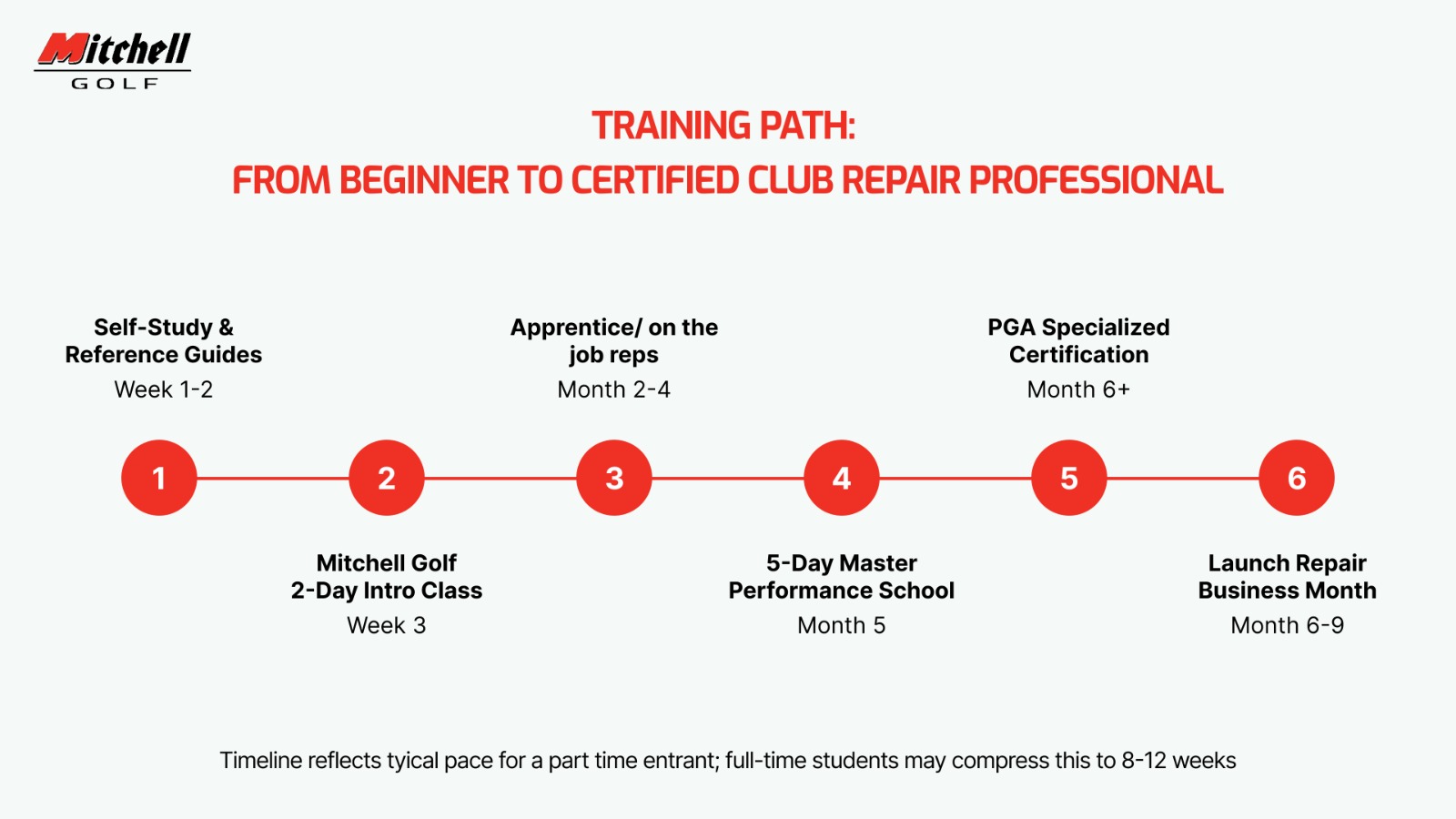
Figure 1: A typical training path from beginner to certified club repair professional, spanning roughly six to nine months for a part-time entrant.
1. Self-Study With Technical Reference Materials
Before investing in classes, build a foundation with authoritative reference material. Mitchell Golf publishes two technical guides used widely across the industry: the Measuring & Bending reference guide and the Adjusting Golf Club Angles PDF, both authored with input from Ed Mitchell, PGA. These documents explain how loft, lie, and face angle are measured and corrected the single most requested repair service in the industry.
2. Structured Hands-On Classes
Mitchell Golf runs a 2-Day Introduction Class covering regripping, basic loft and lie adjustment, and shaft fundamentals on production-grade equipment. It is the fastest way to compress months of trial-and-error into a weekend, and it gives you direct experience on the same SteelClub Signature and TourGauge machines used by OEM production lines.
3. Apprenticeship or On-the-Job Repetition
Volume builds precision. Many technicians spend two to four months working under an experienced club builder, at a pro shop, or repairing clubs for friends and league members at reduced rates to build a portfolio and muscle memory before charging full retail prices.
4. Advanced Certification
For technicians planning to offer full custom fitting and building services, Mitchell Golf’s 4-Day Master Performance School with 1 day intro covers advanced diagnostics, frequency matching, swing weight theory, and shop workflow, culminating in a Master Certification. PGA of America members can pair this with the PGA Specialized Professional track, which carries a program fee in the range of $350, for additional credentialing recognized across the industry.
MITCHELL GOLF AUTHORITY Mitchell Golf’s training curriculum is built around the same equipment found in PGA and LPGA Tour vans and major OEM production facilities. Students train on production-grade tools, not simplified classroom models, so skills transfer directly to real repair work from day one.
Essential Equipment for a Golf Club Repair Business
Equipment quality determines both the ceiling of services you can offer and the consistency of your results. Loft and lie tolerances in professional club fitting are measured in fractions of a degree a flexing or poorly calibrated machine will produce inconsistent readings that erode customer trust. This is the core of Mitchell Golf’s business: precision instruments purpose-built for this exact tolerance requirement.
The Core Toolkit
| Equipment | Function | Typical Investment |
|---|---|---|
| Loft & Lie Angle Machine | Measures and adjusts loft, lie, and face angle on irons, hybrids, and woods | $1,900 – $3,200 |
| Grip Station + Vise | Secures clubs for stripping and installing grips cleanly and consistently | $150 – $600 |
| Shaft Puller | Removes shafts from heads without damage using controlled heat and leverage | $300 – $700 |
| Frequency Meter | Measures shaft flex to match sets and verify consistency across a build | $700 – $1,800 |
| Swing Weight Scale | Verifies club head feel/balance after grip, shaft, or head changes | $200 – $500 |
| Lie Board & Fitting Cart | Confirms real-world lie angle contact and supports fitting sessions | $150 – $900 |
| Epoxy & Ferrule System | Bonds shafts to heads and finishes the hosel transition professionally | $75 – $250 |
| Putter Angle Machine | Dedicated fixture for putter loft/lie, given tighter tolerance requirements | $900 – $1,600 |
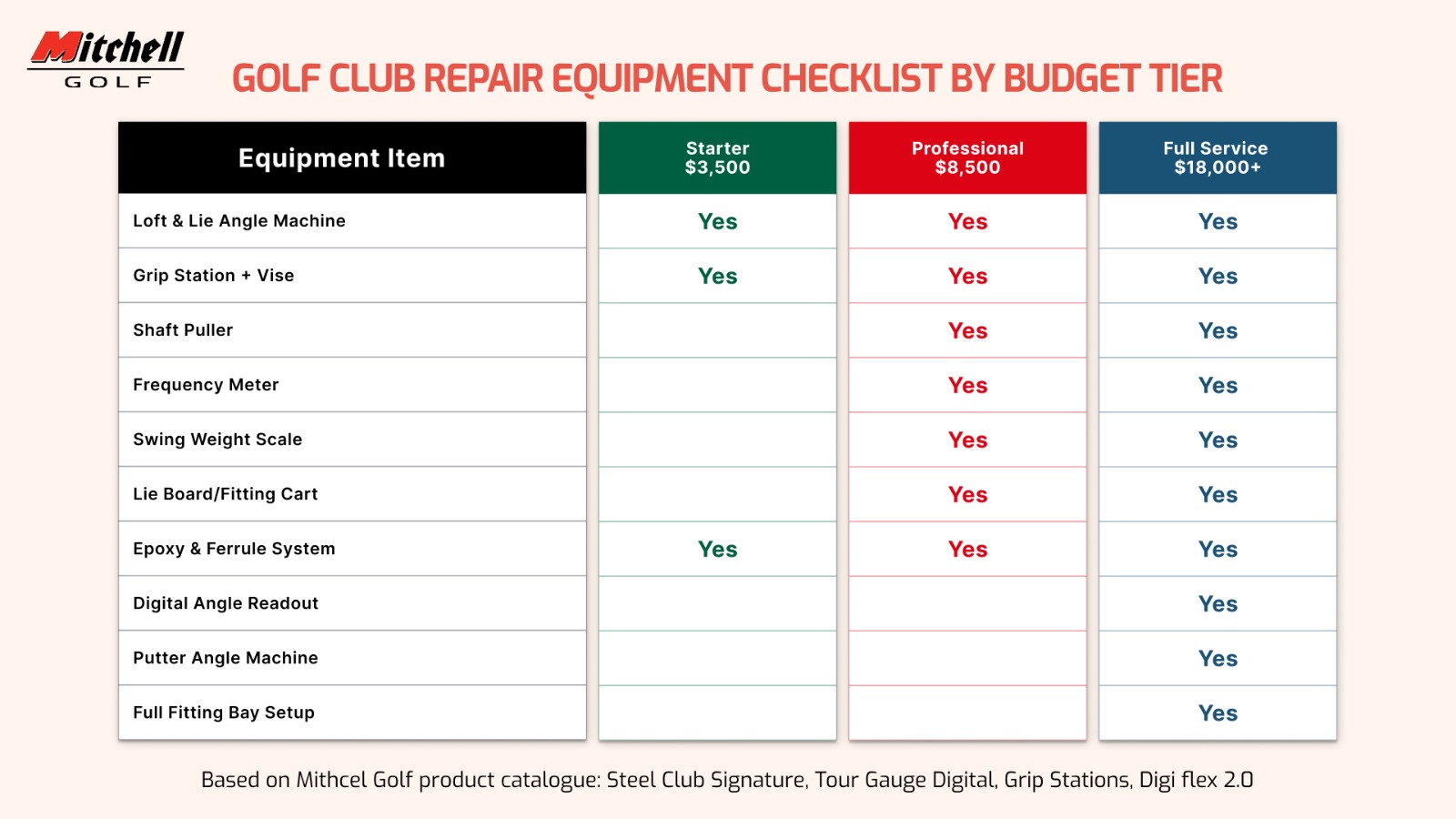
Figure 2: Equipment checklist by budget tier – what is included at each investment level.
Mitchell Golf’s SteelClub Signature Angle Machine is the workhorse most independent shops start with it handles irons, hybrids, and metal woods on a single fixture. Shops that want digital precision and faster readouts typically add the TourGauge Digital Irons Machine, and putter-focused fitters rely on the dedicated TourGauge Putter Machine for the tighter tolerances putters demand. Browse the full range under Angle Machines.
For gripping work typically the highest-volume, fastest-turnaround service in any shop a dedicated Grip Station pays for itself quickly by cutting install time and reducing wasted grip tape and solvent. Explore the complete Re-Gripping category for vises, tape, solvent, and complete kits.
Reshafting and Fitting Equipment
Once regripping and loft/lie adjustment are dialed in, reshafting is the natural next service to add it commands higher per-club pricing and deepens the relationship with serious golfers who upgrade shafts more often than heads. Mitchell Golf’s Re-Shafting category covers shaft pullers, the DigiFlex 2.0 frequency meter, epoxy systems, ferrules, and shaft weights needed for full builds. For technicians moving into diagnostic fitting work, the Fitting category includes swing weight scales, lie boards, and magnetic lie angle pointers used to verify specifications match the golfer, not just the spec sheet.
WHY MACHINE QUALITY MATTERS Every major club manufacturer relies on Mitchell Golf equipment somewhere in its production or quality-control process, and Mitchell machines have equipped PGA and LPGA Tour vans for more than 30 years. That is the standard your shop is competing against the moment a client compares your loft/lie reading to what they got at a tour event or fitting studio.
Startup Costs by Tier
Startup cost is the question every prospective shop owner asks first, and the honest answer is: it depends heavily on how you plan to operate. We break it into three realistic tiers based on Mitchell Golf’s product pricing and current industry cost research.
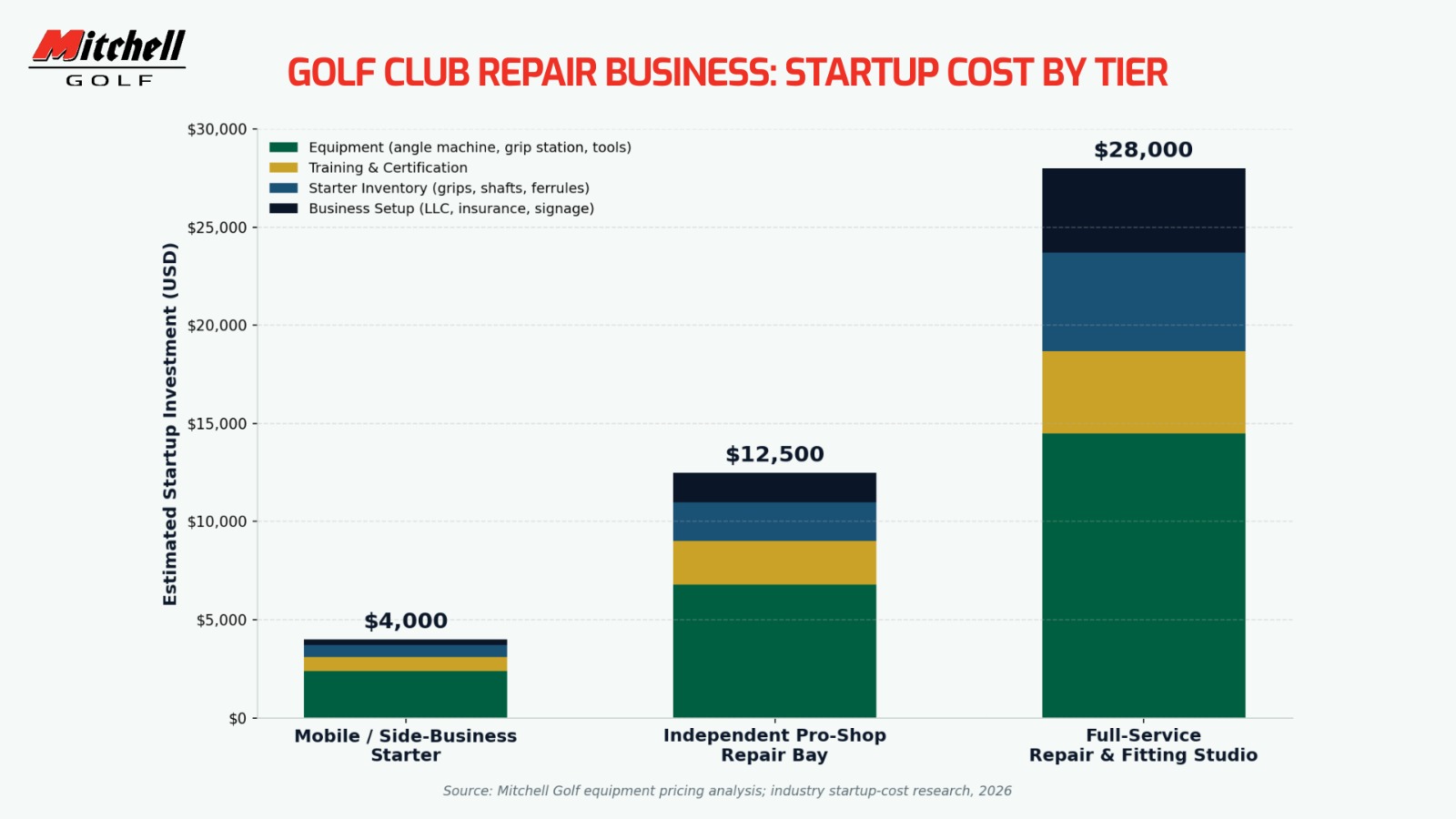
Figure 3: Estimated startup investment by business tier, broken down by equipment, training, inventory, and business setup costs.
| Tier | Total Investment | What’s Included |
|---|---|---|
| Mobile / Side-Business Starter | ~$4,000 | Angle machine, grip station, hand tools, epoxy kit, basic intro training |
| Independent Pro-Shop Repair Bay | ~$12,500 | Full core toolkit, frequency meter, swing weight scale, intro + master training |
| Full-Service Repair & Fitting Studio | ~$28,000 | Digital angle machines, putter machine, complete fitting bay, full inventory, certification |
These figures track closely with independent industry analysis: a proper single-technician shop covering everything short of wedge grinding and putter milling typically runs about $5,000 for top-of-the-line core gear, with a fully equipped, three-service shop landing in the $4,500-$7,000 equipment range before training, inventory, and setup costs are layered on. Compare that to the $75,000-$200,000 range typical of golf simulator lounges, driving ranges, or full pro-shop retail buildouts, and the accessibility of repair as an entry point becomes clear.
Working Capital and Ongoing Costs
Beyond initial equipment, plan for recurring costs: consumables (grip solvent, tape, epoxy, ferrules run $1-$3 per club in materials), replacement grips and shafts held as inventory, liability insurance ($400-$900/year for a home or small commercial operation), and a modest marketing budget. Most solo operators can run lean because the business does not carry payroll, and rent is optional if you operate from a home shop or rent bay space inside an existing pro shop.
Setting Up Your Shop
Whether you are converting a garage bay, a spare room, or leasing 200-300 square feet inside a golf facility, workflow matters more than square footage. A well-organized shop lets a single technician move a club through inspection, adjustment, and finishing without backtracking.
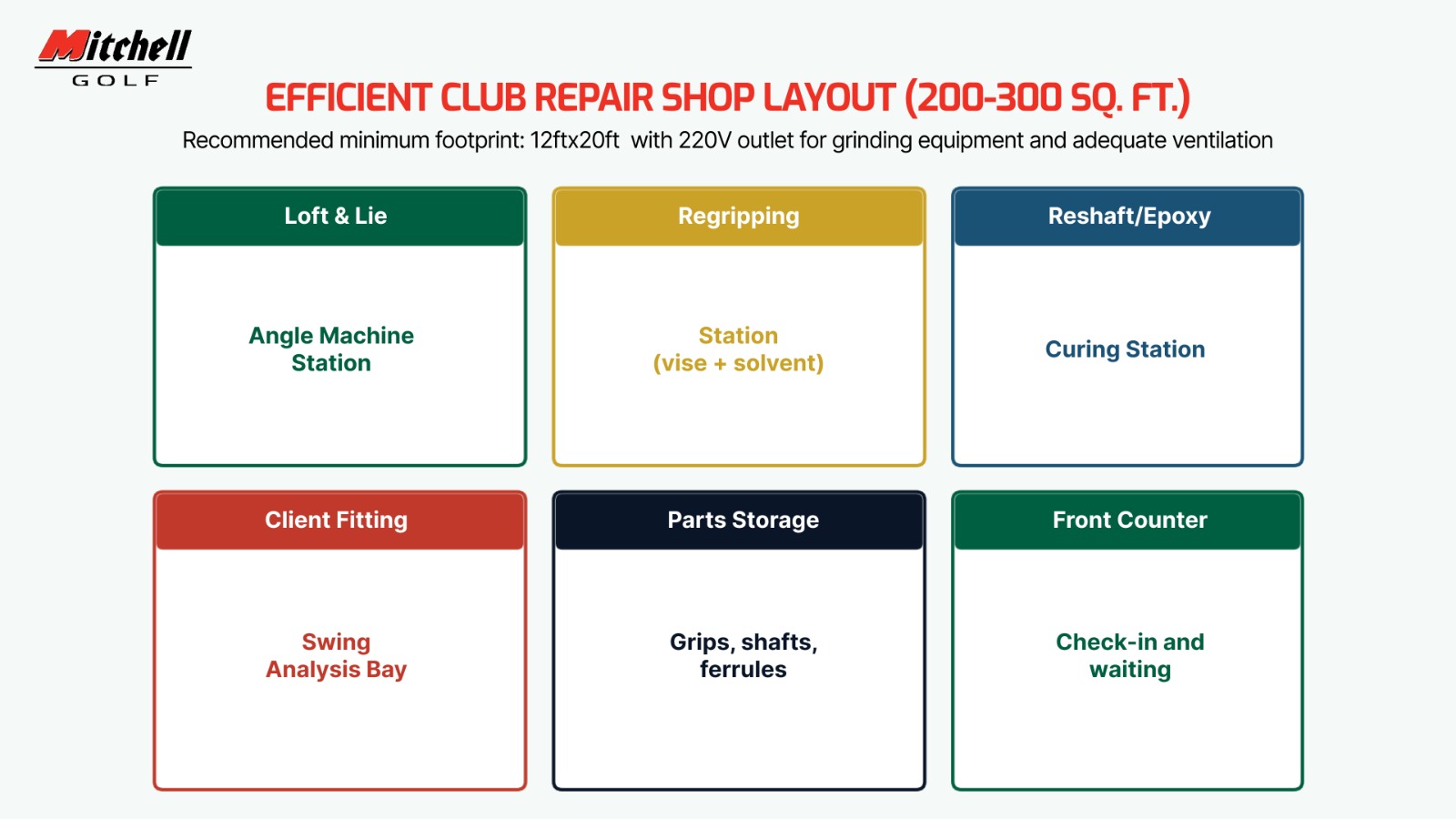
Figure 4: A recommended 200-300 square foot shop layout separating angle machine, gripping, and reshaft stations from client-facing fitting and check-in areas.
Minimum Facility Requirements
- Footprint: 12 ft x 20 ft minimum for a comfortable single-technician operation with client space
- Power: Standard 120V is sufficient for most repair equipment; a 220V outlet is recommended if you add grinding or buffing equipment later
- Ventilation: Required for epoxy curing and grip solvent use a small exhaust fan or open-bay setup is sufficient for most shops
- Bench space: A dedicated, stable bench for the angle machine is non-negotiable vibration and an unlevel surface are the leading causes of inaccurate loft/lie readings
- Storage: Labeled bins for shafts, grips by size and brand, and ferrules by shaft diameter save meaningful time on high-volume days
MOBILE OPTIONIf a fixed location is not practical yet, a rolling toolbox with a portable angle machine, folding grip vise, and a small inventory case lets you serve golf leagues, corporate outings, and driving ranges directly a proven way to build a client base before committing to a lease.
Service Menu and Pricing
Pricing should reflect both material cost and the skill premium your training represents. Regripping is typically the entry-level, highest-volume service; loft/lie adjustment and reshafting carry higher margins once you are confident in accuracy; and full fitting sessions are where trained technicians differentiate from a generic “clubs” ad on a local marketplace.
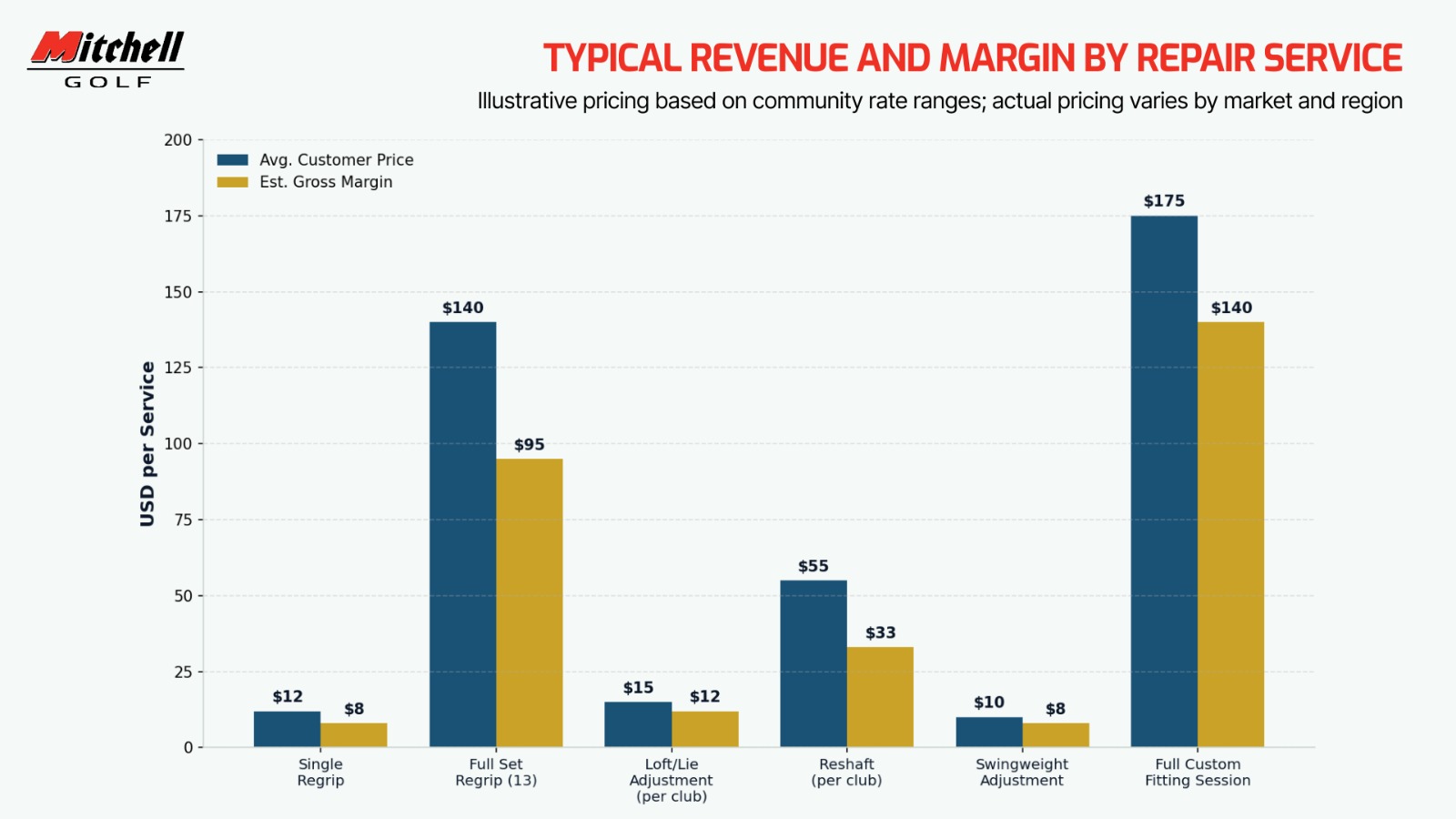
Figure 5: Typical revenue and gross margin by repair service, based on common industry rate ranges.
| Service | Avg. Price | Est. Gross Margin |
|---|---|---|
| Single Regrip | $10 – $15 | ~65-70% |
| Full Set Regrip (13 clubs) | $120 – $160 | ~65-70% |
| Loft/Lie Adjustment (per club) | $12 – $20 | ~75-80% |
| Reshaft (per club, labor only) | $45 – $65 | ~55-60% |
| Swingweight Adjustment | $8 – $12 | ~75-80% |
| Full Custom Fitting Session | $150 – $200 | ~75-80% |
A technician doing five full-set regrips and ten loft/lie adjustments in a week a modest, realistic pace for a part-time operation is already clearing $800-$1,000 in gross revenue on materials that cost well under $150. Once equipment is paid off, most of that flows to labor income.
Sourcing Parts and Inventory Management
Inventory discipline is where many new shops leak profit. Overbuying slow-moving grip models ties up cash; underbuying causes delays that frustrate clients expecting same-day turnaround. Treat inventory as a rolling forecast tied to your actual client base rather than a one-time stocking event at launch.
Best Practices
- Stock the top 3-5 grip models by market share (standard rubber, cord/hybrid, and one midsize option) rather than every SKU available
- Buy shafts on a per-order basis until volume justifies holding stock most distributors ship in 2-5 business days
- Standardize ferrules and epoxy to reduce the number of consumable SKUs you manage
- Track turnaround promises against actual stock nothing damages a new repair business’s reputation faster than a missed same-day promise on an out-of-stock grip
Building Supplier Relationships
As volume grows, establishing accounts directly with grip, shaft, and component manufacturers rather than buying retail typically unlocks wholesale pricing that materially improves margin on regripping and reshafting work. Most suppliers extend trade pricing once you can show a business license and a modest purchase history, so it is worth formalizing your business structure early even if you start small.
Seasonal Demand and Cash Flow Planning
Club repair demand is seasonal in most U.S. markets, with volume climbing sharply from early spring through the end of summer and tapering through fall and winter. Regripping sees a pre-season surge as golfers refresh worn grips before their first rounds, while loft/lie adjustment and reshafting requests tend to peak mid-season after golfers have played enough rounds to notice performance issues or damage. New shop owners should budget for slower winter months by building a cash reserve during peak season, and consider off-season revenue supplements such as club cleaning/regripping specials, indoor simulator partnerships, or off-season fitting days timed around holiday gift-giving.
Marketing and Building a Client Base
Club repair is a relationship business built on word of mouth, but a few channels consistently move the needle for new shops:
- Partner With a Local Course or League: Offer a discounted introductory regrip rate to a golf league or club in exchange for being the recommended technician.
- Build a Simple, Fast Website and Google Business Profile: Capture search demand for “club regripping near me” and similar queries with services, pricing, and turnaround time.
- Demonstrate Precision, Not Just Price: Share before/after loft and lie readings to build credibility with serious golfers.
- Launch a Referral Program: Offer a discount or free swingweight check for every new customer an existing client sends your way.
- Use Short-Form Video to Show Your Process: A 30-second clip of a loft/lie correction or clean regrip builds trust faster than written descriptions.
Business Structure, Licensing, and Insurance
Most independent club repair operations register as a single-member LLC, which limits personal liability while keeping tax filing simple. Combined with a business license (cost varies by municipality, typically $50-$400) and general liability insurance, most operators can be legally compliant for under $1,000 in first-year overhead. If you plan to seek outside financing, an SBA-backed loan is a common path for equipment and working capital, and requires a business plan with realistic financial projections the cost tiers and service pricing in this guide are a reasonable starting point for those projections.
DON’T SKIP INSURANCE A single damaged tour-issue driver head or mis-cut shaft can represent hundreds of dollars in liability. General liability coverage, and ideally a tools/equipment rider, is inexpensive relative to the exposure it protects against.
Scaling – From Side Hustle to Full-Time Shop
The natural growth path follows the same tiers used for startup costs: begin mobile or part-time, reinvest early revenue into a dedicated angle machine and fitting bay, then add reshafting and custom fitting as trained skill and demand justify it. Many successful independent club builders eventually add a second technician once volume consistently exceeds roughly 15-20 hours of billable repair work per week the point at which turnaround times start to slip without additional capacity.
Consider formal certification milestones as scaling gates: complete the 5-Day Master Performance School (1 day intro)before advertising full custom fitting services, and add a dedicated TourGauge Putter Machine once putter work becomes a regular request rather than an occasional one.
Common Mistakes to Avoid
- Buying budget angle machines first. An inaccurate machine produces inconsistent readings that clients eventually notice accuracy is the entire value proposition of this business.
- Skipping training to save money. The cost of a ruined shaft, cracked hosel, or mis-bent iron head from an untrained attempt almost always exceeds the cost of a class.
- Underpricing services. New technicians often price below market to win early clients, then struggle to raise prices later without losing them.
- Overstocking inventory. Tying up capital in slow-moving grip colors or shaft models before establishing real demand patterns strains cash flow.
- Ignoring calibration. Angle machines need periodic calibration checks an uncalibrated machine is worse than no machine, because it produces confidently wrong numbers.
- Neglecting documentation. Recording before/after specs for every club builds a service history that protects you from disputes and gives clients confidence in repeat visits.
- Trying to offer every service on day one. Master regripping and loft/lie adjustment first the two highest-volume, highest-margin services before expanding into reshafting and full fitting.
Putting It All Together
Starting a golf club repair business is less about finding a gap in the market that gap is well documented by rising participation numbers and more about executing the fundamentals well: invest in accurate equipment, get proper training before taking on paying clients, price services to reflect the skill involved, and manage inventory and cash flow like any other small business. Technicians who follow this sequence typically reach profitability faster than those who buy equipment first and figure out training and pricing later.
The path from first grip station to a full-service repair and fitting studio is well worn. Mitchell Golf has supported that path for nearly four decades, from the machines on the bench to the training that teaches technicians how to use them to tour-level tolerances.