
Overview: Four Machines, One Standard of Accuracy
Since 1988, Mitchell Golf Equipment Company has manufactured the professional-grade loft and lie angle machines that club manufacturers, PGA Tour vans, and repair shops around the world rely on. Shop owners calling into Mitchell Golf’s support line most often narrow their decision to four models in our angle machine lineup: the TourGauge TGIM, the SteelClub SAMI, the TourGauge Digital TGDIM, and the SteelClub Signature.
All four machines carry the same Mitchell Golf guarantee: 100% accurate, 100% repeatable readings, built on precision components that hold up to production-line volume. None is simply a “budget” or “premium” version of another each is engineered around a different combination of readout style and bending-position technology. This guide breaks down the real specs, workflows, and shop scenarios so you can decide which one belongs on your bench, or whether you should run more than one.
A note on objectivity: All four machines discussed here are manufactured by Mitchell Golf. We’re not going to tell you one is “better” across the board we’re going to tell you which one is built for which job. This revision also corrects a point our technical team flagged in an earlier version: wood and hybrid bending is not the Signature’s strongest selling point. Its real advantage is explained below.
Why the Right Machine Matters
Loft and lie are the foundation of every custom fitting. A single degree of lie angle miss can shift point of impact on the face enough to send a shot several yards offline. Our companion guide, What Is Loft and Lie in Golf, covers the fitting fundamentals in depth this article focuses on the hardware that measures and corrects those angles.
Choosing among these four machines is not just a budget decision. It is a workflow decision: digital or analog readout, how many technicians will use the machine, and the question this revision puts front and center how much it matters that hosel position stays constant across every loft, rather than shifting as the club changes.
Meet the Four Machines
Here is the quick snapshot our support team uses when a shop calls in undecided. The single most important distinction: three of these machines TGIM, SAMI, and TGDIM secure the club in a fixed-position fixture, where hosel position during the bend is determined by loft. Only the SteelClub Signature uses a pivoting, rotating face fixture that holds the hosel in a constant bending position regardless of loft.
| Machine | Readout | Bending Position | Coverage |
|---|---|---|---|
| TourGauge TGIM | Analog scale | Fixed (varies by loft) | Irons |
| SteelClub SAMI | Analog scale | Fixed (varies by loft) | Irons |
| TourGauge Digital TGDIM | Digital display | Fixed (varies by loft) | Irons |
| SteelClub Signature | Analog scale | Constant, any loft | Irons + ltd. woods/hybrids |
TourGauge TGIM: Specs & Workflow
The TourGauge TGIM is the analog entry point into the TourGauge family a precision slide-bearing gauge assembly paired with an engraved analog scale rather than an electronic display. It is built to the same 100% accuracy and repeatability standard as every other Mitchell Golf machine.
How it works
The club is secured in a fixed-position A-frame fixture, and the technician reads loft and lie directly off the engraved scale. Because the fixture is fixed rather than pivoting, hosel position during the bend is determined by the loft of the club in the fixture. Technicians learn to compensate for that shift quickly, and it has no bearing on measurement accuracy.
Best suited for
- Shops getting started with in-house loft and lie adjustment
- Irons-and-wedge-focused operations that do not need a digital readout
- Budget-conscious first-machine purchases with a clear upgrade path later
SteelClub SAMI: Specs & Workflow
The SteelClub SAMI is the analog irons workhorse of the SteelClub family. Functionally, it shares the same fixed-position fixture approach as the TourGauge TGIM the two machines are, in practice, the analog irons entry points of Mitchell Golf’s two product lines, differing mainly in branding and standard included hardware rather than core measuring technology.
How it works
Like the TGIM, the club is clamped into a fixed fixture and read off an engraved analog scale. Hosel position during the bend is set by loft, the same as every non-Signature model in the lineup.
Best suited for
- Shops standardized on the SteelClub product family
- Irons-focused fitting and repair work
- A dependable second station alongside a Signature or TGDIM machine
TourGauge Digital TGDIM: Specs & Workflow
The TourGauge Digital TGDIM is the only digital-readout option among these four machines. It uses the same precision slide-bearing gauge assembly and the same fixed-position fixture as the TGIM, paired with an electronic display that shows loft and lie in quarter-degree increments the moment the club is registered.
How it works
A magnet built into the shaft cradle assists in registering a steel shaft, and the display updates in real time. Calibration is only required after power loss: insert the zero pin, hit the zero button, and the display resets. Like the TGIM and SAMI, the TGDIM secures the club in a fixed-position fixture, so hosel position during the bend still shifts with loft the digital display changes how you read the measurement, not how the club is held.
Best suited for
- High-volume iron fitting where speed of readout matters between clients
- Newer technicians who benefit from a direct numeric display
- Tour van and traveling fitting environments
One limitation worth knowing: the TGDIM is an irons machine. It does not bend metal woods or hybrids, and analog/digital gauge assemblies cannot be converted on the same base.
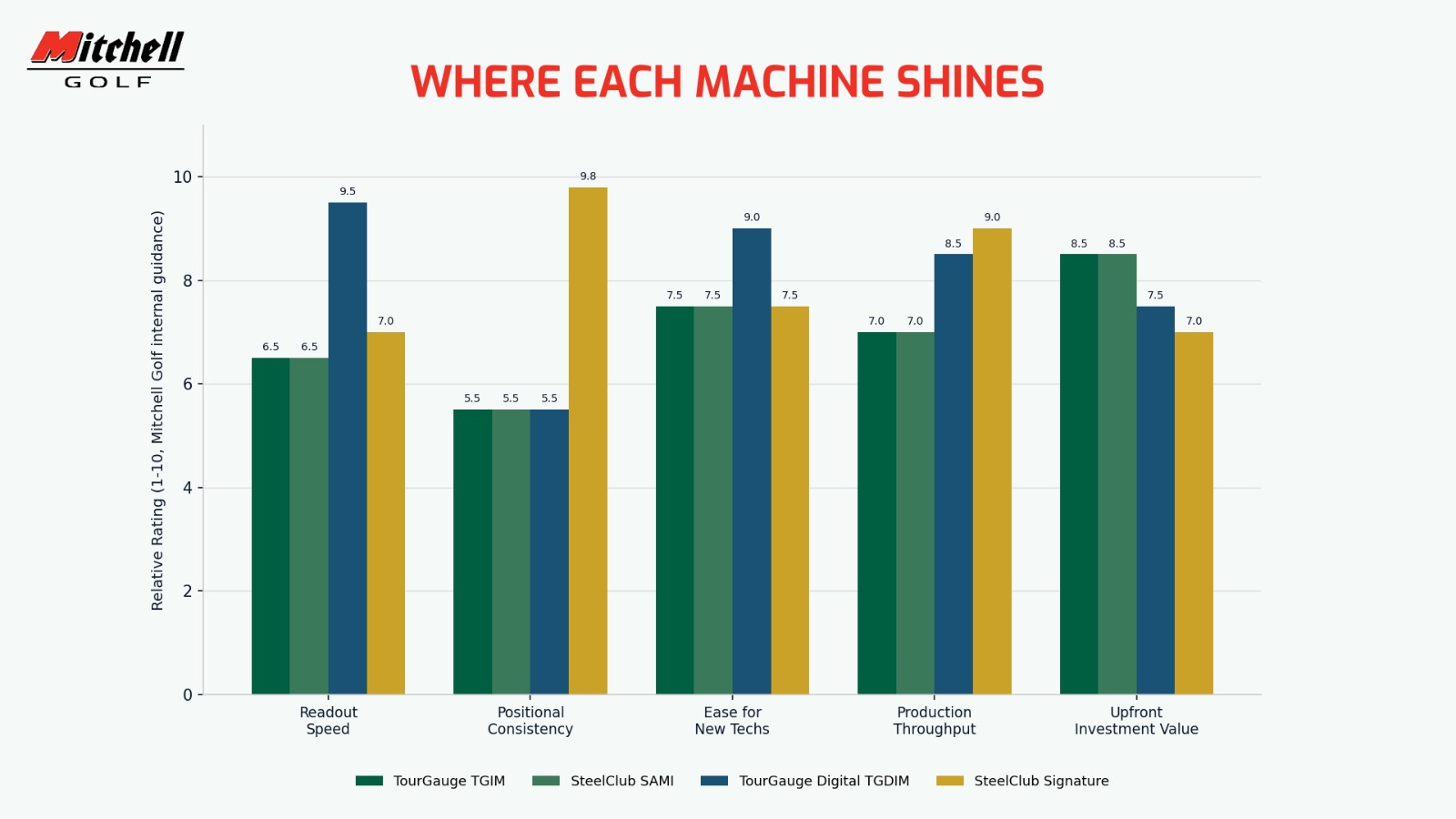
Figure 1: Relative strengths of all four machines across five common shop priorities.
SteelClub Signature: Specs & Workflow
The SteelClub Signature is Mitchell Golf’s premium bending machine, and its real advantage is not what earlier marketing around this machine emphasized. It uses Dual Precision Gauges to read loft and lie with an engraved analog scale, the same as the TGIM and SAMI. What sets it apart is the fixture itself.
How it works
The defining engineering feature of the Signature line is an extra handle, mounted in front of the main T-handle, that lets the face fixture pivot and rotate — keeping the hosel in a constant bending position regardless of the loft of the club being worked on. On the TGIM, SAMI, and TGDIM, hosel position shifts as loft changes across the set; on the Signature, it does not.
The Signature also ships with a rubber-padded top clamp and short-hosel bending bar attachments that allow it to measure and adjust metal woods and hybrids using interchangeable adapters. This capability is real but has meaningful limitations: adapter-based bending works within a narrower range of hosel and construction types than iron bending, and clubs built with certain factory adapter systems cannot be re-bent at all. In practice, most shops use the Signature primarily for the constant-position advantage on irons, with wood/hybrid capability as a secondary, occasional-use feature.
Best suited for
- Shops that want a consistent, repeatable hosel bending position across every loft in a set
- High-volume or precision-focused shops reducing technique variability across a full range of lofts
- Shops that occasionally verify or adjust metal wood/hybrid specs, understanding adapter limitations
Engineering distinction: The pivoting, rotating face fixture is unique to the Signature line and is the machine’s real headline feature. Every other Mitchell Golf angle machine covered here uses a fixed A-frame face fixture, where the loft of the iron determines hosel position during bending. Wood and hybrid bending via adapters is a genuine capability, but given real adapter limitations, it is a secondary benefit rather than the main reason most shops choose this machine.
Feature-by-Feature Comparison
Here is the complete side-by-side breakdown across all four machines, condensed from Mitchell Golf’s internal specification sheets and the Measuring & Bending reference guide authored by Ed Mitchell, PGA.
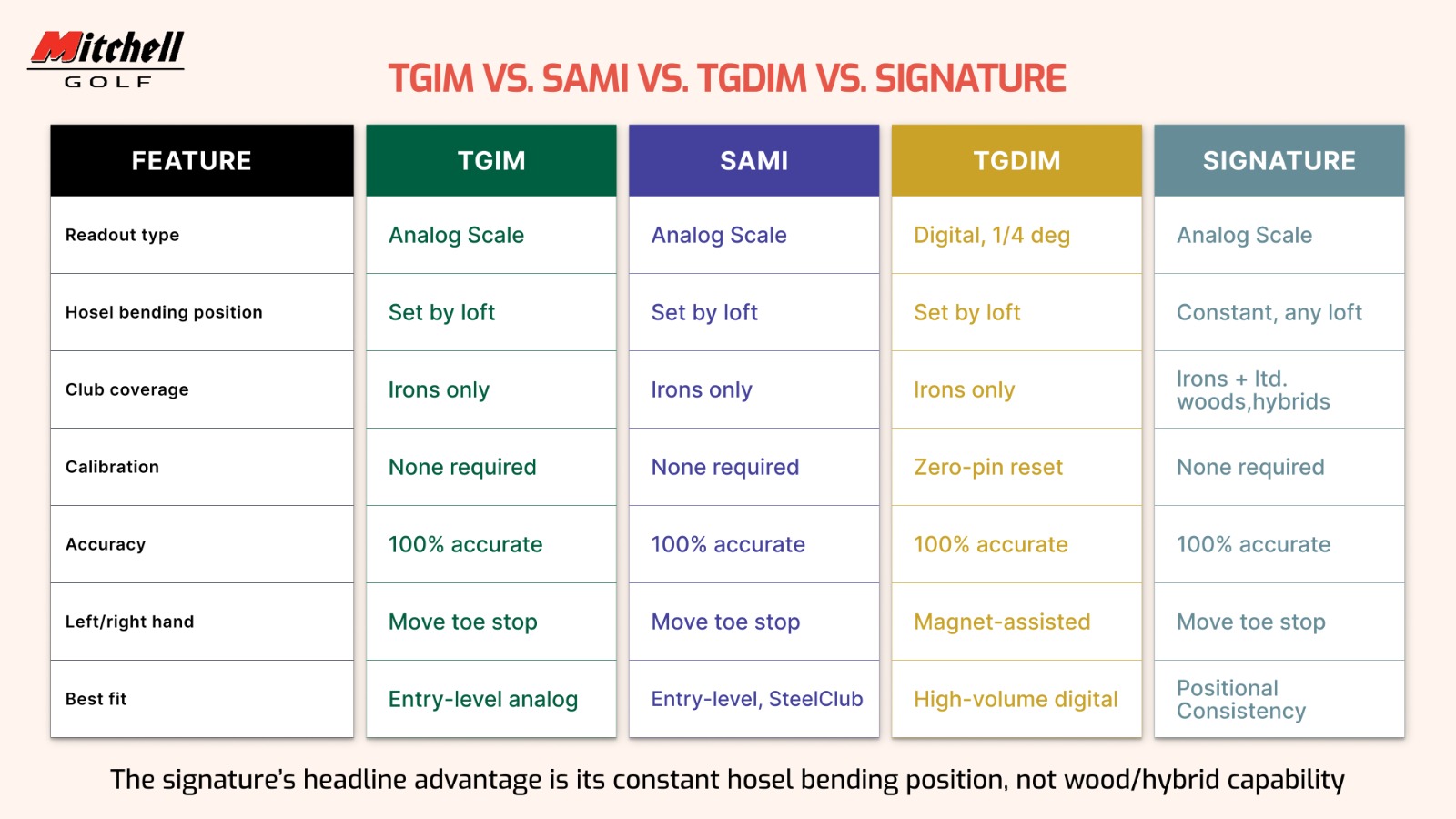
Figure 2: Feature-by-feature comparison of all four Mitchell Golf irons angle machines.
| Category | TGIM | SAMI | TGDIM | Signature |
|---|---|---|---|---|
| Readout | Analog | Analog | Digital, 1/4-deg | Analog |
| Club coverage | Irons only | Irons only | Irons only | Irons + ltd. woods/hybrids |
| Hosel position | Set by loft | Set by loft | Set by loft | Constant, any loft |
| Calibration | None required | None required | Zero-pin reset | None required |
| Accuracy | 100% accurate | 100% accurate | 100% accurate | 100% accurate |
| Upgrade path | Trade-in to digital | Trade-in to digital | N/A | N/A |
Fixed Position vs. Constant Position: Why It Matters
This is the single most important technical distinction in the Mitchell Golf irons angle machine lineup. The TGIM, SAMI, and TGDIM all secure the club the same way: in a fixed A-frame face fixture, where hosel position during the bend is a function of the loft of the club being worked on. This is completely normal and does not affect measurement accuracy — it is how the large majority of angle machines in the industry, including three of Mitchell Golf’s own four models, work.
The SteelClub Signature is different. Its pivoting, rotating face fixture actively repositions to keep the hosel in a constant bending position no matter what loft is loaded into the fixture — the technique used to bend a high-loft wedge and a low-loft long iron is the same, club after club.
Why constant position matters more than wood/hybrid capability for most shops: A previous version of this guide framed the Signature’s wood and hybrid bending capability as its headline feature. Based on direct feedback from Mitchell Golf’s technical staff, that framing undersold the machine’s actual strength and oversold a capability with real adapter limitations. The constant bending position is relevant on every iron a shop bends, making it the more meaningful differentiator for daily production and consistency between technicians.
Measuring & Bending Workflow
Regardless of which machine you choose, the fundamental measuring and bending workflow is the same five-step process, and Mitchell Golf machines are engineered so a full set of irons can be measured and adjusted to spec in under 10 minutes.
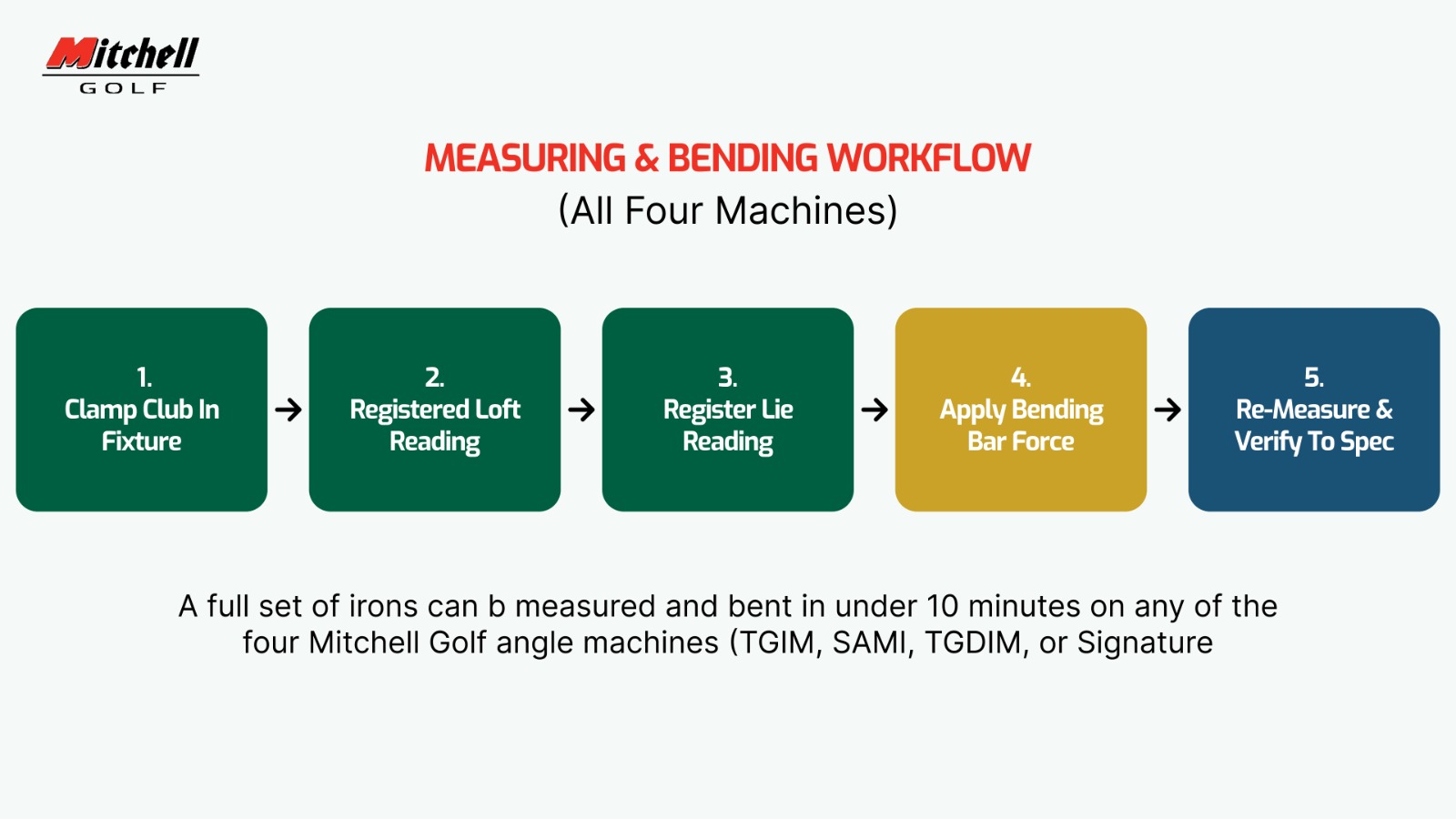
Figure 3: The standard measuring and bending workflow shared across all four machines.
- Clamp the club securely in the fixture. On the TGIM, SAMI, and TGDIM, hosel position is set by loft; on the Signature, the pivoting fixture holds it constant.
- Register the loft reading instantly on TGDIM, via analog scale on TGIM, SAMI, and Signature.
- Register the lie reading using the same process.
- Apply bending bar force at the hosel. Because the machine is anchored to concrete, only the hosel moves during the bend.
- Re-measure and verify to spec before releasing the club from the fixture.
Accuracy & Repeatability
One question we hear constantly: “Is the digital machine more accurate than the analog ones?” No. Every Mitchell Golf angle machine TGIM, SAMI, TGDIM, and Signature alike is built to the same 100% accuracy and repeatability standard. The differences between models are readout format and bending-position consistency, not measurement precision.
A key engineering advantage Mitchell Golf machines hold over lower-cost competitor systems is the use of precision bearings and rails rather than a rod-based slide system, which develops play over time and introduces inconsistency.
Independent research backs the stakes: Published golf equipment research has repeatedly shown that lie angle deviations of just a few degrees measurably shift impact location and shot dispersion, which is why tolerance-checked, production-grade measurement is standard practice among club manufacturers and tour fitting vans alike.
Which Machine Fits Your Shop
Use the decision path below as a starting point. It reflects the same guidance our sales and support team gives shops calling in to choose between models.
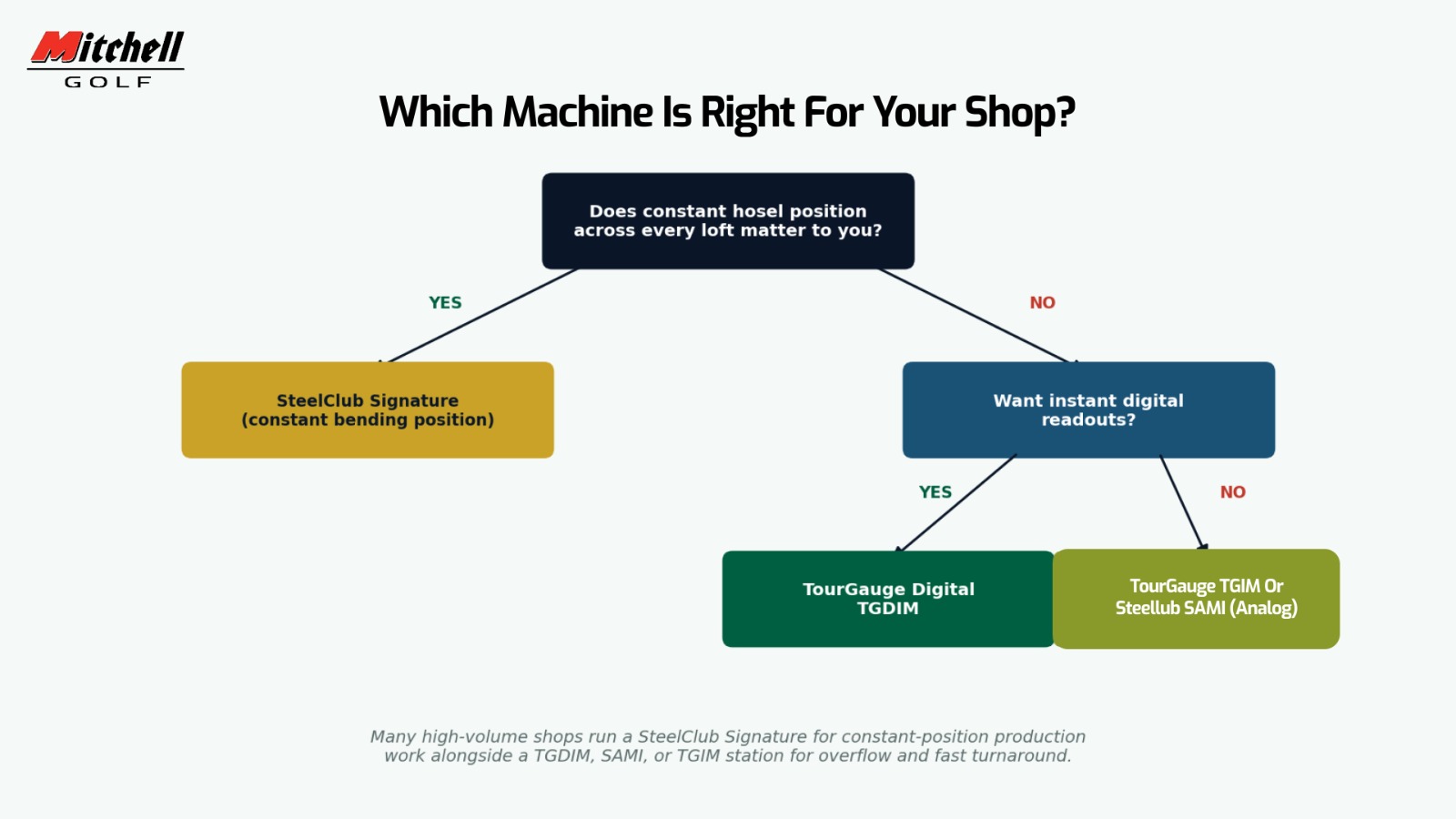
Figure 4: A simple decision path for choosing among Mitchell Golf’s four irons angle machines.
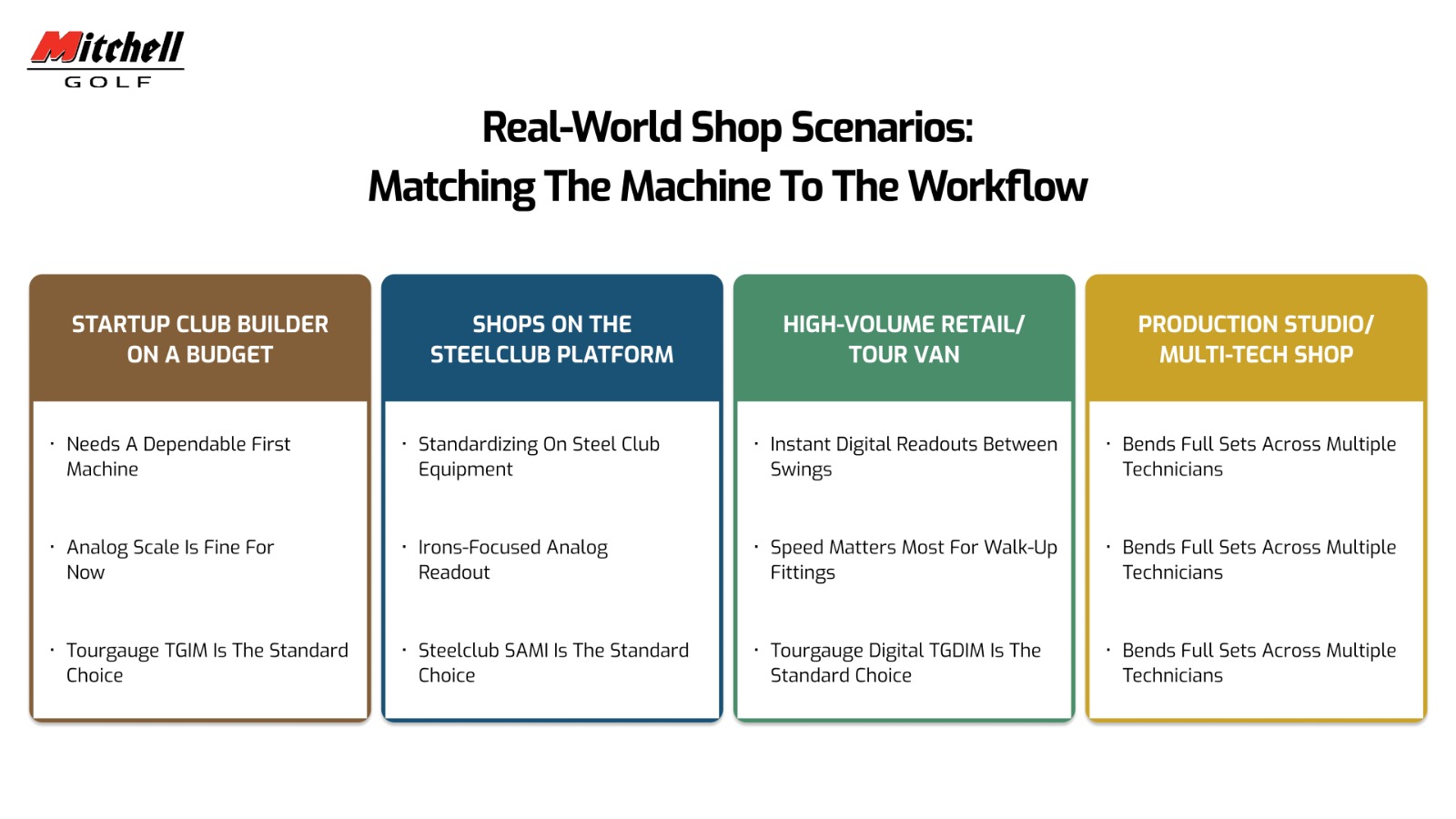
Figure 5: Real-world shop scenarios matched to the machine that best fits the workflow.
Choose TourGauge TGIM if…
- You’re purchasing your shop’s first angle machine and want a dependable analog entry point
- Your shop is iron-and-wedge focused and doesn’t need a digital display
Choose SteelClub SAMI if…
- You want the same analog, fixed-position fixture as the TGIM on the SteelClub platform
- You’re building out or standardizing on SteelClub equipment
Choose TourGauge Digital TGDIM if…
- You want the fastest possible readout for high-volume or walk-in fitting days
- You’re training newer techs who benefit from a direct numeric display
Choose SteelClub Signature if…
- You want a constant, repeatable hosel bending position across every loft the machine’s core advantage
- You occasionally need to verify or adjust metal wood/hybrid specs, understanding adapter limitations
Consider running more than one if…
Many high-volume shops, OEM repair centers, and multi-technician operations run a SteelClub Signature for its constant-position advantage on primary production work, alongside a TGDIM or SAMI/TGIM station for overflow capacity and fast turnaround.
Cost, ROI & Upgrade Path
Every Mitchell Golf angle machine listing includes the floor mount stand, bending bar, and sleeve anchors needed to permanently secure the unit to concrete not an optional add-on cost. With the base bolted down, the only component moving during a bend is the hosel itself, which gives the technician direct tactile feedback.
Because analog and digital gauge assemblies cannot be swapped on the same base machine, shops anticipating a digital upgrade should factor that into the initial choice between TGIM/SAMI and TGDIM, or plan to use Mitchell Golf’s trade-in program later.
From a pure ROI standpoint, the math comes down to volume, technician count, and how much positional consistency matters not sticker price alone. A shop bending 40 sets a week with one dedicated technician often does fine on a TGIM, SAMI, or TGDIM. A shop running multiple technicians across long fitting days tends to see the clearest return from the Signature’s constant bending position with any wood/hybrid adapter use treated as a bonus, not the deciding factor.
Specifications at a Glance
| Spec | TGIM | SAMI | TGDIM | Signature |
|---|---|---|---|---|
| Gauge technology | Precision bearings, analog | Precision bearings, analog | Bearings + digital sensor | Dual Precision Gauges, analog |
| Reading resolution | Fine-graduated analog | Fine-graduated analog | 1/4-degree | Fine-graduated analog |
| Club categories | Irons | Irons | Irons | Irons + ltd. woods/hybrids |
| Manufacturing origin | Albion, Michigan | Albion, Michigan | Albion, Michigan | Albion, Michigan |
Maintenance & Longevity
All four machines are built for decades of shop use, and none require routine recalibration under normal conditions. The TGDIM only needs its zero-pin calibration reset after power loss; the TGIM, SAMI, and Signature’s fixed gauges require no calibration unless a scale is physically removed. Precision bearings and rails, standard across all four models, keep readings consistent over years of daily production use.
If your shop also handles re-gripping and re-shafting, our complete guide to regripping golf clubs and our re-shafting equipment line are natural companions to whichever angle machine you choose.
Tour Van Pedigree
Mitchell Golf angle machines have been standard equipment in PGA Tour and LPGA Tour equipment trucks for more than 30 years. That pedigree applies across all four lines traveling techs who need instant digital readouts often favor TourGauge Digital, while techs who want consistent hosel positioning across a full range of lofts lean on SteelClub Signature.
Technical authorship: Mitchell Golf’s technical reference guides, including the Measuring & Bending and Adjusting Golf Club Angles PDFs referenced throughout this document, are authored by Ed Mitchell, PGA.
Common Mistakes When Choosing an Angle Machine
Mistake 1: Buying the Signature for wood/hybrid capability alone
If wood and hybrid re-loft work is the only reason you’re considering a Signature, look closer at how often that work comes through your door, and be aware of real adapter limitations. The Signature’s strongest advantage is its constant hosel bending position on irons applying to every club you bend, not just the occasional wood or hybrid.
Mistake 2: Skipping the concrete anchor
Shops that skip anchoring lose the tactile feedback of the machine staying still while only the hosel moves and introduce a real risk of inconsistent readings.
Mistake 3: Assuming digital means “more accurate”
This is simply not true on Mitchell Golf equipment. All four machine families are 100% accurate.
Mistake 4: Underestimating training time
Digital readouts shorten the learning curve, but none of the four machines is genuinely difficult to master with proper instruction.
Real-World Shop Scenarios
The startup club builder on a budget
A new club builder outfitting their first bay often starts with a TourGauge TGIM or SteelClub SAMI a dependable analog machine that gets the shop running without the higher investment of a digital or Signature model.
The high-volume retail pro shop
A retail shop doing walk-up lie checks values speed above all else. A TourGauge Digital TGDIM lets staff read loft and lie in seconds and move to the next customer.
The production-focused fitting studio
A studio bending large numbers of irons across multiple technicians benefits most from the Signature’s constant bending position keeping technique consistent from club to club and technician to technician.
The OEM repair center or multi-tech facility
Facilities running multiple shifts often standardize on more than one machine: a Signature for constant-position production work, plus a TGDIM or SAMI/TGIM station for overflow.
Training Your Team
Hardware is only half of the equation. Mitchell Golf’s 2-Day Introductory Class covers fundamentals of measuring and bending across the TourGauge and SteelClub equipment lines, while the 5-Day Master Performance School goes deeper into advanced fitting, re-shafting, and full-bag optimization.