
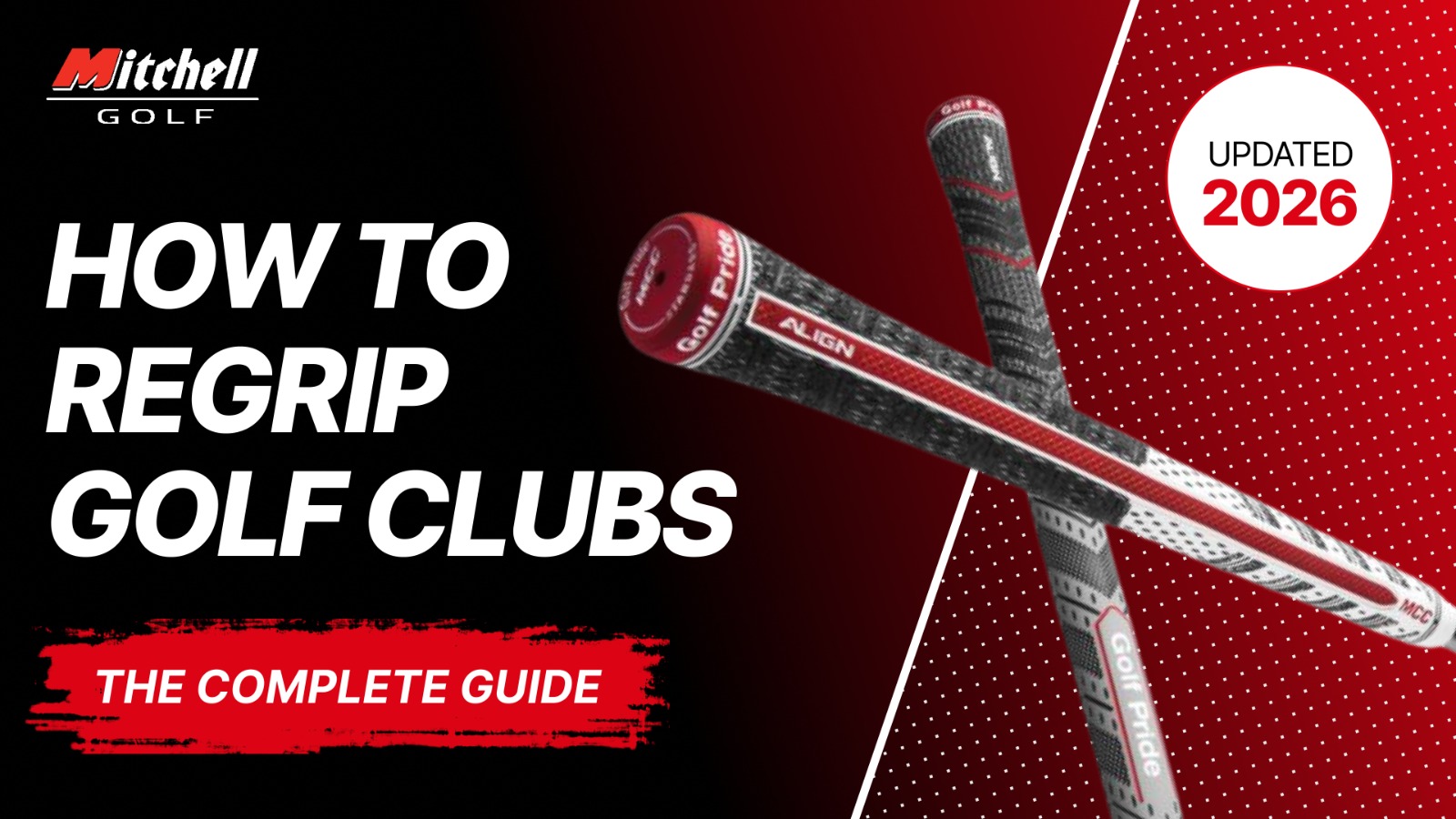
Your grip is the only part of the club that touches your body. When it wears out, your control, feel, and consistency all suffer. Most golfers replace clubs long before they replace grips – which is backwards. A fresh set of grips is one of the most affordable performance upgrades you can make.
A Golf Pride study found that worn, two-year-old grips cost the average golfer 3 to 4 shots per round. That is the kind of impact most people spend hundreds of dollars trying to fix with new equipment, when a $10 grip and 10 minutes of work would do the same thing.
This guide covers everything: how to know when to regrip, how to pick the right size, what tools you need, the full step-by-step process for two methods, and what tour-level technicians do differently.
Signs Your Grips Need Replacing
You do not need any special tools to check. These are the main things to look for:
| Sign | What It Looks Like | What to Do |
|---|---|---|
| Smooth or glazed surface | Texture has worn flat — the grip looks shiny | Replace now |
| Cracks or hardening | Surface is split or feels stiff and brittle | Replace now — safety risk |
| Slipping in your hands | Grip rotates before you even start your downswing | Replace now |
| Sticky then slick feel | Rubber is breaking down in stages | Replace soon |
| Fading or discoloration | UV exposure has degraded the rubber compound | Replace — performance is already affected |
| 12 to 18 months old | Even if it still looks acceptable visually | Inspect carefully; if in doubt, replace |
Choosing the Right Grip Size
The wrong grip size creates real problems. Too small and you over-rotate. Too large and you lose wrist action entirely. Getting this right before installing anything is worth two minutes of your time.
How to measure
Measure from the crease of your wrist to the tip of your middle finger. That one number maps directly to a standard grip size.
Grip size chart by hand measurement — source: Mitchell Golf Grip Measuring & Sizing Guide, Ed Mitchell PGA
| Grip Size | Hand Measurement | Who It Is For |
|---|---|---|
| Undersize / Junior | Less than 7 inches | Small hands, juniors, or players who want more wrist release |
| Standard | 7 to 8¾ inches | Most adult golfers — this is the industry baseline |
| Midsize | 8¼ to 9¼ inches | Larger hands, or anyone who grips the club too tightly |
| Oversize / Jumbo | Over 9¼ inches | Very large hands, arthritis, or players wanting to reduce grip pressure |
A few other things affect the right size, beyond the hand measurement:
- Grip pressure. If you tend to hold the club too tight, going up one size can naturally reduce that tension without any conscious effort.
- Glove size. Men’s Large typically maps to Standard or Midsize. Men’s XL maps to Midsize or Oversize.
- Arthritis. Larger grips reduce stress on the finger joints. This is well documented, not just a comfort preference.
- Tape layers. Each additional wrap of double-sided tape adds about 1/64 inch to the grip diameter. Professionals use this to hit exact sizing without ordering specialty grips.
Tools You Need For regripping
| Tool | What It Is For |
|---|---|
| Hook-blade utility knife | Cuts the old grip along its length — the hook profile keeps the blade away from the shaft |
| Double-sided grip tape | 3/4 inch or 2 inch width; the tape the new grip bonds to on the shaft |
| Grip solvent | Temporarily activates the tape adhesive so the grip slides on; with the correct amount, grips are ready in approximately 1 hour |
| Vice with rubber shaft clamp | Holds the club still while you work; rubber protects the shaft from being crushed |
| Catch pan | Collects excess solvent under the club — you can pour it back and reuse it |
| Clean rags | Wipes the shaft clean and removes old tape residue |
For a professional shop
If you are regripping multiple sets per week, basic hand tools slow you down and create inconsistency. Mitchell Golf grip stations are used in every major PGA Tour van for exactly this reason — faster, more consistent results every time.
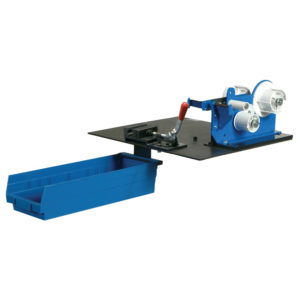
Mitchell Golf Grip Station — Bench Mount. mitchellgolf.com/shop/re-gripping/grip-stations/grip-station-bench-mount/
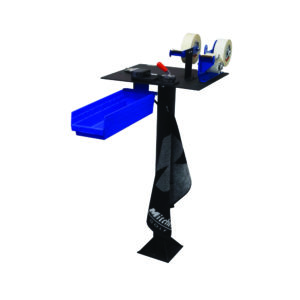
Mitchell Golf Grip Station — Floor Mount Stand. mitchellgolf.com/shop/re-gripping/grip-stations/grip-station-floor-mount-stand/
| Equipment | What It Does |
|---|---|
| Grip Station (Bench / Floor / Portable) | Holds the club securely; supports the solvent method; Pro Tour Grip Vise included |
| Pro Tour Grip Vise | Clamps the shaft without marking it — important for graphite and customers’ premium clubs |
| Grip tape dispenser | Cuts tape to a consistent length every time; meaningfully speeds up high-volume work |
| Grip removal tools | Removes old grips without a knife — no risk of accidentally scoring the shaft |
How to Regrip — Step by Step
The solvent method is the standard approach used by golfers and professionals worldwide. It works on any grip, on any shaft, with basic tools. Takes roughly 5 to 10 minutes per club.
Overview of the 6-step regripping process using the solvent method
1. Remove the old grip.
Insert the hook-blade knife at the base of the grip and cut along its full length toward the butt end. Keep the blade angled away from the shaft — especially important on graphite. Peel the grip off and remove all old tape from the shaft.
2. Clean the shaft.
Wipe the shaft down with grip solvent or mineral spirits until all old adhesive is gone. Any residue left on the shaft creates bumps under the new grip. Let it dry fully before moving on.
3. Mark the placement.
Hold the new grip against the shaft and mark where its end sits with a pencil. This ensures your tape covers the right area.
4. Apply double-sided tape.
Apply a single strip of 2 inch tape from just below the butt end down to your mark. Leave about half an inch overhanging the butt — fold that inside the open shaft end. Smooth it completely flat. No wrinkles.
5. Apply grip solvent.
Cover the open end of the new grip with your finger and pour solvent inside until it coats the interior. Then pour the rest over the tape on the shaft. Work quickly — you have about 60 seconds before the adhesive re-activates.
6. Slide the grip on.
Push the grip onto the shaft in one steady motion until it is fully seated. Do not stop halfway.
7. Align and let it cure.
While the solvent is still wet — first 30 to 60 seconds — rotate the grip to line up the logo or any alignment mark the way the player wants. Wipe off excess solvent. With the correct amount of solvent, the grip is typically ready for use within approximately 1 hour.
Important for graphite shafts:
Graphite is strong under flex but very vulnerable to surface scoring. A single nick from a knife can create a stress fracture that causes the shaft to fail mid-swing. Always angle the blade well away from the shaft, use a rubber clamp in the vice, and consider using a dedicated grip removal tool rather than a knife.
Graphite vs. Steel Shafts
The regripping process is mostly the same for both materials, but the tolerance for error is very different.
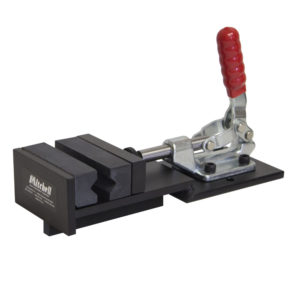
Mitchell Golf Pro Tour Grip Vise — clamps the shaft securely without marking it. Used in every major PGA Tour van.
| Steel | Graphite | |
|---|---|---|
| Knife cutting | Fine — can be more direct | Always angle the blade well away — zero tolerance for scoring the surface |
| Vice clamping | Rubber clamp recommended | Rubber clamp required — metal jaws will crush or mark the shaft |
| After stripping | No special inspection needed | Always check the shaft surface for any marks or scoring before regripping |
Club-Specific Tips
Irons and wedges
Straightforward. Standard tape and solvent work fine. One important thing to confirm before installing: whether the player wants a rib grip or a round grip, and the exact orientation. Many iron grips have a raised reminder rib meant to sit under the lead hand’s lifeline. Get this wrong and the player will feel it immediately.
Woods and drivers
The larger grip circumference and thicker rubber can make seating harder than usual. Use a bit more solvent and apply firm, steady pressure. For adjustable hosel drivers, check after installing that the grip does not interfere with the hosel adjustment ring.
Putters
Putters have the most variety of any club type — pistol grips, flat-sided paddles, oversized grips all install differently. Two things matter most:
- Alignment. A putter grip that is off by even a few degrees subtly distorts your aim at address. Use a ruler or straight edge to confirm the top flat edge is perfectly square to the clubface before the grip sets.
- Oversized grips. These need significantly more solvent and firm pressure to seat properly all the way down. A professional grip station makes this much easier and gives a more consistent result.
How Often Should You Regrip?
The standard guideline is every 40 rounds or every 12 to 18 months, whichever comes first. In practice it depends on how much you play.
| Type of Golfer | Rounds Per Year | How Often to Regrip |
|---|---|---|
| Casual / weekend | Under 20 | Every 1–2 years, or when visually worn |
| Regular golfer | 20–40 | Every 12–18 months |
| Avid or competitive | 40–70 | Every 12 months; check grips mid-season |
| Teaching professional | 70+ | Every 6 months |
| PGA Tour professional | 100+ | 3–4 times per season |
Climate matters more than most people realise. Golfers in hot or humid conditions, or anyone who sweats a lot during rounds, will wear out grips noticeably faster. Storing clubs in a cool, dry place extends grip life.
Professional Shop Regripping Costs
Most golf shops charge $2–$5 in labor per club, on top of the cost of the grip. For current pricing on grips and regripping supplies, visit mitchellgolf.com/product-category/re-gripping/
| Grip Tier | Grip Cost Each | Labor Per Club | Full Set — 13 Clubs |
|---|---|---|---|
| Budget | $3–$5 | $2–$5 | $65–$130 |
| Mid-range | $6–$10 | $2–$5 | $104–$195 |
| Premium | $12–$20 | $3–$5 | $195–$325 |
Worn vs. New Grip – What Actually Changes

Performance comparison: worn grip vs. new grip. Golf Pride study: worn grips cost golfers 3–4 shots per round on average.
The performance difference is not subtle. A worn grip forces you to grip tighter — your hands register the instability even before your brain does. That tension travels up your arms, into your shoulders, and ruins swing mechanics. A fresh grip lets you hold the club with exactly as much pressure as you choose, which is the only way to swing with real consistency.
Tips from PGA Tour Technicians
These are the things experienced technicians do that most home regrippers skip:
- Clean the shaft before taping – every time. Even brand-new shafts have manufacturing oils that weaken the tape bond. A quick wipe with solvent before taping is non-negotiable in professional settings.
- Mark orientation before removing the old grip. Put a strip of masking tape alongside the existing grip with an alignment line on it. When the new grip goes on, you know exactly where the player wants it — no guesswork.
- Check swing weight after changing grips. Grip weight affects swing weight. If you are switching grip models or sizes, verify swing weight still matches the player specification with a swing weight scale.
- Use a tape dispenser for volume work. It cuts tape to a consistent length every time, eliminates fumbling with the roll, and meaningfully speeds up batch regripping in a shop setting.
Sources: Golf Pride Performance Study; Ed Mitchell PGA Grip Measuring & Sizing Guide (2017); pricing data from StickGrips, GolfSpan, Par3NearMe (2025–2026).